
Frizzy Hair Causes: 9 Reasons Your Hair Frizzes (and Fixes)
Frizzy hair is not a hair type. It is what happens when the cuticle lifts and lets moisture in and out unevenly. The most common frizzy hair causes are habits you repeat every wash day, which is good news: habits can be changed, and the change shows up within two weeks. Below are the nine…
Frizzy hair is not a hair type. It is what happens when the cuticle lifts and lets moisture in and out unevenly. The most common frizzy hair causes are habits you repeat every wash day, which is good news: habits can be changed, and the change shows up within two weeks.
Below are the nine frizzy hair causes in the order they actually show up, with what to change for each one.
The nine frizzy hair causes
1. You are drying your hair with a towel
Rubbing wet hair with a terry towel roughens the cuticle every single time. Wet hair is at its most fragile, and the friction lifts the scales that keep the surface smooth. This is one of the most common frizzy hair causes, and the easiest to remove.
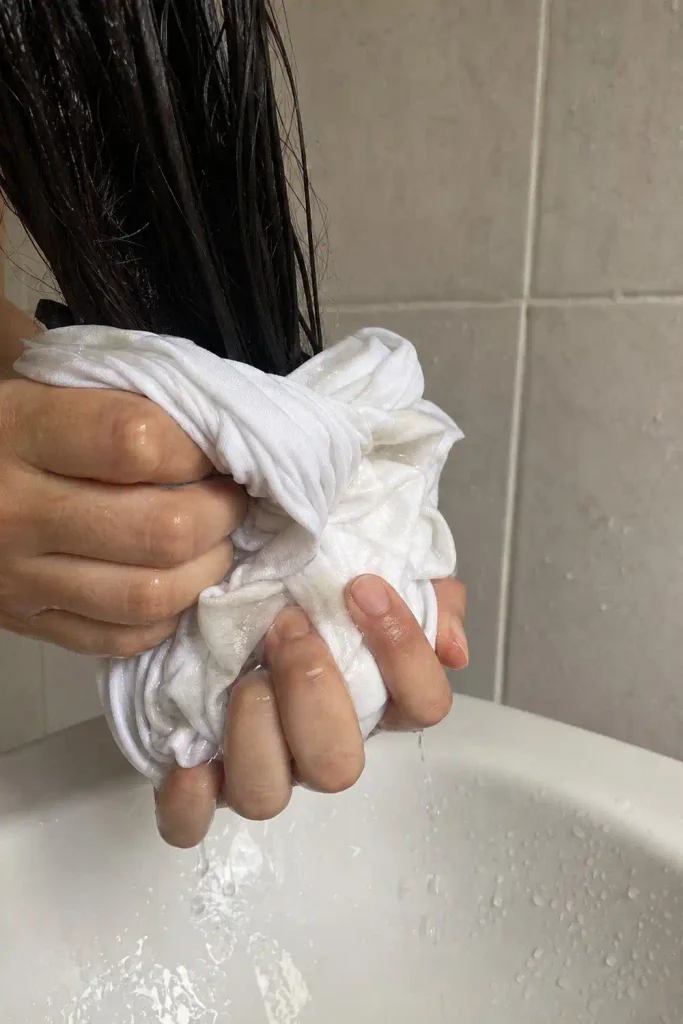
What to do: squeeze the water out, do not rub. Use a cotton t-shirt or a microfibre towel and press it against your hair for a minute.
2. Your conditioner is not reaching the ends
Conditioner applied to the roots does nothing for frizz, because frizz lives in the mid-lengths and ends — the oldest, driest parts of the strand.
What to do: apply conditioner from the ears down, leave it two to three minutes, and rinse with cool water.
3. You are brushing dry hair
Every stroke of a brush on dry hair pulls the cuticle up and creates static. Curly and wavy hair suffers most, because brushing separates the curl clumps and turns them into a cloud. It is one of the frizzy hair causes people never suspect, because a brush feels gentle.
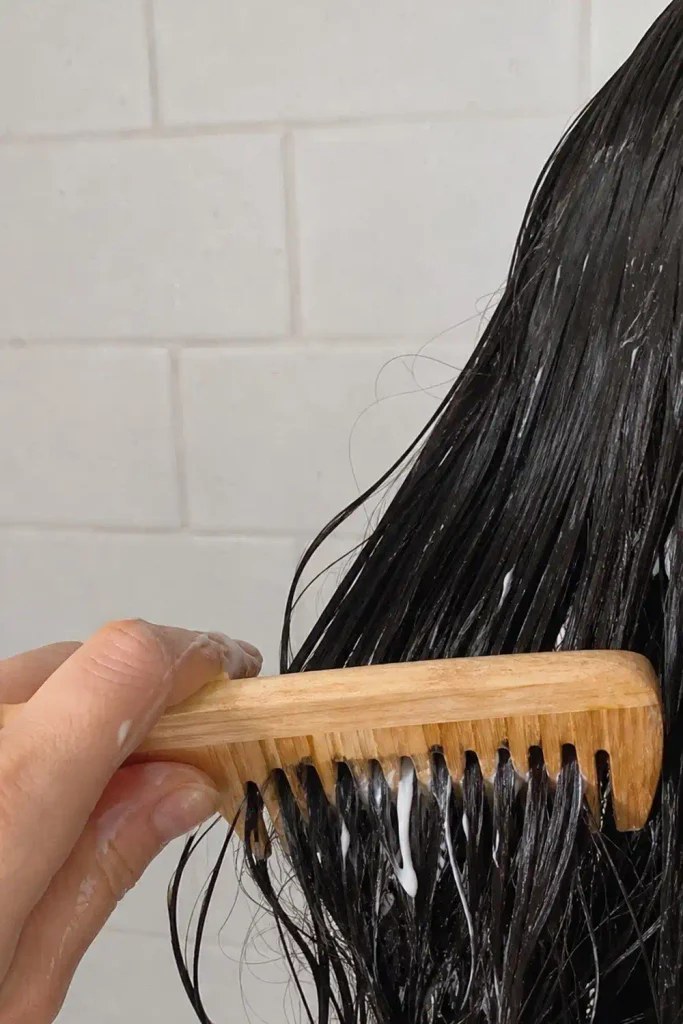
What to do: detangle in the shower with conditioner in, fingers first, then a wide-tooth comb.
4. Your shampoo is too harsh
Sulfates strip the oils that coat the cuticle and hold it flat. The scalp then over-produces oil while the ends stay dry — the classic “greasy roots, frizzy ends” combination. Of all the frizzy hair causes, this one is the most visible at the roots.
What to do: switch to a sulfate-free shampoo, wash two to three times a week, and use a clarifying shampoo once every two to three weeks.
5. Your hair is high porosity
High porosity hair has gaps in the cuticle, so it absorbs moisture from the air in seconds and loses it just as fast. That swelling and shrinking is frizz. Porosity is separate from curl pattern, which is why two people with the same hair type can need opposite routines.
What to do: layer products — water-based leave-in first, then a light oil on the ends to seal it.
6. You are using too much protein
Protein treatments repair, but used too often they make hair stiff. Stiff hair cannot bend with humidity, so it snaps and frizzes at the same time. Protein overload sits quietly on the list of frizzy hair causes because most people add more of it, not less.
What to do: a protein mask every three to four weeks, alternating with a moisture mask. Never both on the same day.
7. Hard water is leaving minerals in your hair
Calcium and magnesium build up on the strand and block moisture from absorbing properly. Frizz that returns within a day of washing is often a water problem, not a product problem — the one item on this list of frizzy hair causes that no bottle fixes.
What to do: a chelating treatment twice a month, and a shower filter if you can install one.
8. You are touching your hair during the day
Hands transfer oil and lift the cuticle. Twisting and constantly smoothing hair with your fingers is one of the least discussed frizzy hair causes.
What to do: keep a little leave-in on your hands if you must touch it, and try a loose braid on humid days.
9. Your hair is already breaking
Short, rough hairs sticking out around the crown are usually broken hairs, not new growth — and no serum fixes them. Frizz and hair breakage are the same story told from two ends: a lifted cuticle lets moisture in badly and lets the strand snap easily.
What to do: check for split ends, trim every eight to twelve weeks, and treat the breakage itself rather than the frizz on top of it.
The routine that removes most frizzy hair causes
Wash two to three times a week with a sulfate-free shampoo. Condition from the ears down and rinse cool. Squeeze the water out with a cotton t-shirt. Apply leave-in to damp hair, then a light oil on the ends only. Air-dry or diffuse on low heat. Sleep on a silk or satin pillowcase.
That is it. No serum, no oil blend, no ten-step ritual — just fewer things lifting the cuticle. Notice that almost every item on the list of frizzy hair causes comes down to three things: friction, moisture and minerals.
How fast can frizz improve?
Most people notice a difference in the first two weeks, once the towel and the brush are out of the routine. Texture and shine improve over four to six weeks. Frizz caused by breakage takes longer, because the damaged length has to grow out — which is also why tracking your length month by month is more useful than judging it in the mirror.
Frequently asked questions
Does cutting my hair stop frizz?
A trim makes frizz look softer, but it does not remove the frizzy hair causes. The cause is the cuticle, not the length.
Is frizzy hair damaged hair?
Not always. Naturally high porosity hair looks frizzy without being damaged. Frizz becomes a damage sign when it appears with roughness and snapping.
Does frizz mean my hair is dry?
Usually. But it can also be the opposite: hair absorbing moisture from humid air. That is why heavy oils sometimes make it worse.
Should I use oil on frizzy hair?
On the ends, yes, and only a small amount. Oil seals moisture in; a water-based leave-in is what adds it.
Can frizz be fixed permanently?
Most of it, yes, once the everyday frizzy hair causes are gone. Humidity will always affect the surface, but the amount you see drops sharply.