
The Ultimate Guide to Hair Types: How to Identify and Care for Your Hair from 1A to 4C
Understanding your natural hair pattern is the single most important step toward building a healthy, effective beauty routine. For decades, many struggled with frizz, dryness, or lack of volume simply because they were using products designed for completely different hair types. Fortunately, the universal classification system divides human locks into four primary hair types: Straight (Type…
Understanding your natural hair pattern is the single most important step toward building a healthy, effective beauty routine. For decades, many struggled with frizz, dryness, or lack of volume simply because they were using products designed for completely different hair types.
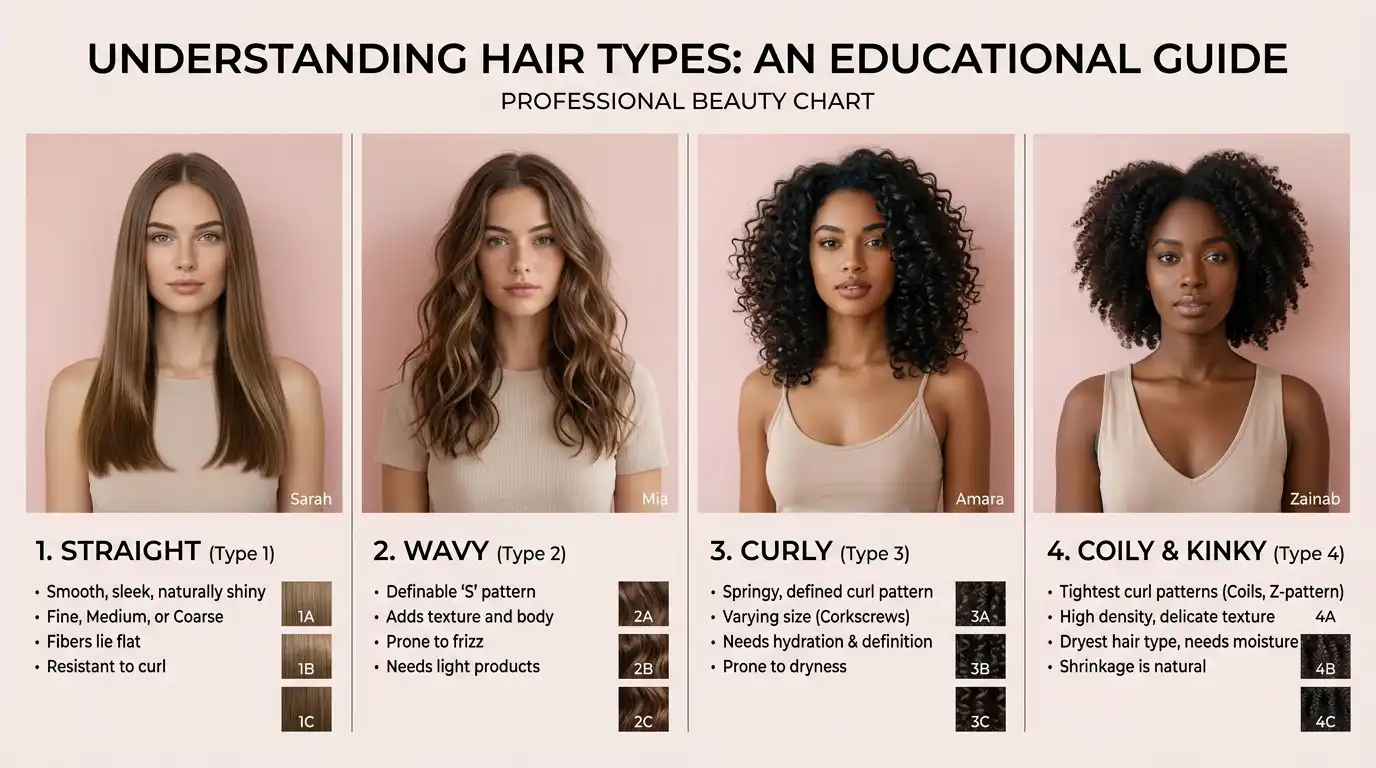
Fortunately, the universal classification system divides human locks into four primary hair types: Straight (Type 1), Wavy (Type 2), Curly (Type 3), and Coily (Type 4). Each of these categories is further divided into sub-types (A, B, and C) based on the diameter of the wave, curl, or coil.
In this comprehensive guide, we will break down different hair types, help you identify your unique pattern, and provide expert care and styling tips to unlock your hair’s full potential.
Type 1: Straight Hair (1A, 1B, 1C)
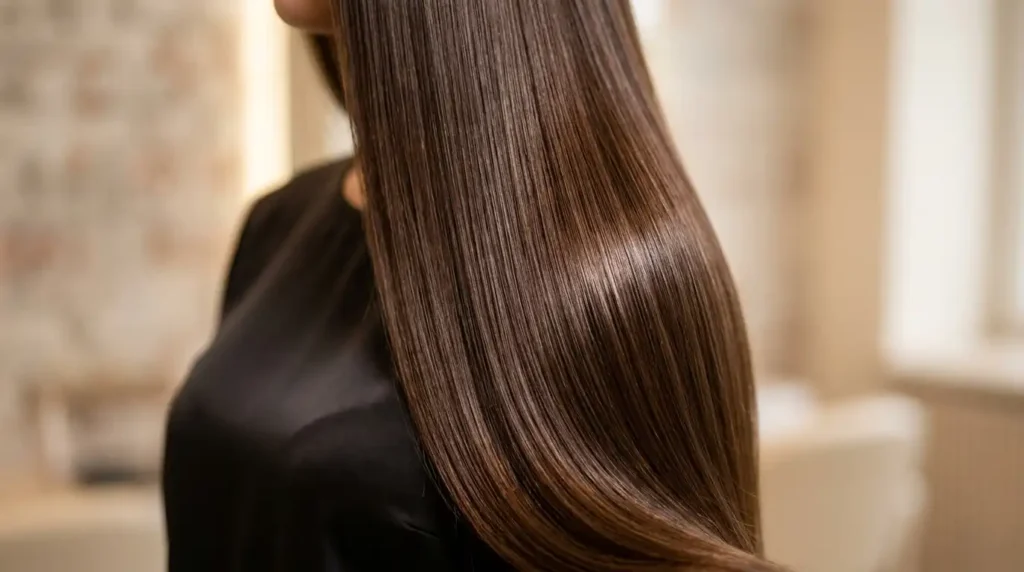
When we analyze straight hair types, we look at strands that lack any natural curl pattern. It lies flat on the scalp and is highly efficient at reflecting light, giving it a natural, healthy shine. Because sebum (natural scalp oil) travels easily down straight hair types, they are prone to oiliness but extremely resilient.
Type 1A Hair
Type 1A is the rarest of all straight hair types. It is completely straight, extremely fine, and has zero natural body or wave. It is virtually incapable of holding a curl, even with heavy styling products.
Type 1B Hair
Type 1B is straight but features more volume and body than 1A. It has a slight thickness to individual strands and can hold a curl when styled properly. Most straight-haired individuals fall into this sub-category.
Type 1C Hair
Type 1C hair is straight but thick, coarse, and heavy. It lies flat but has a subtle, almost invisible wave threshold that gives it a unique, heavy texture. It is prone to frizz and can be difficult to style without the right products.
Discover how to manage and style this unique, heavy straight texture in our detailed, dedicated guide: The Ultimate Guide to Mastering Your Type 1C Hair.
Type 2: Wavy Hair (2A, 2B, 2C)
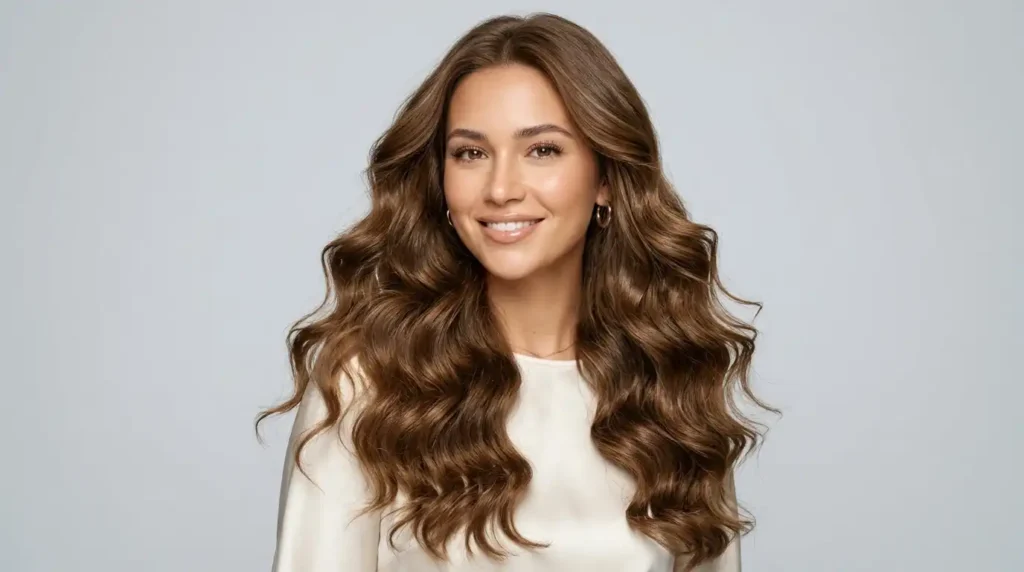
Wavy hair types occupy the beautiful middle ground between straight and curly textures. They feature a distinct “S” shaped pattern when lying flat. These wavy hair types are generally thicker than straight strands and require a balanced approach to moisture and volume.
Type 2A Hair
Type 2A features fine, thin waves that are easy to straighten. The wave pattern is very loose and starts closer to the eye level rather than the roots. It lacks significant volume but is easy to style.
Type 2B Hair
Type 2B has a more defined “S” shape pattern. The waves are thicker than 2A and start further up the hair shaft. It has moderate volume but is highly susceptible to frizz.
If your waves need extra definition and frizz control, don’t miss our comprehensive care manual: Expert Tips and Care Guide for 2B Hair.
Type 2C Hair
Type 2C hair features thick, coarse waves that start right at the roots. The “S” pattern is so defined that it often borders on light curls. This type is very prone to frizz and volume expansion in humid weather.
Learn how to tame coarse waves and define your pattern with our step-by-step roadmap: [The Complete 2C Hair Guide to Frizz-Free Waves].
Type 3: Curly Hair (3A, 3B, 3C)
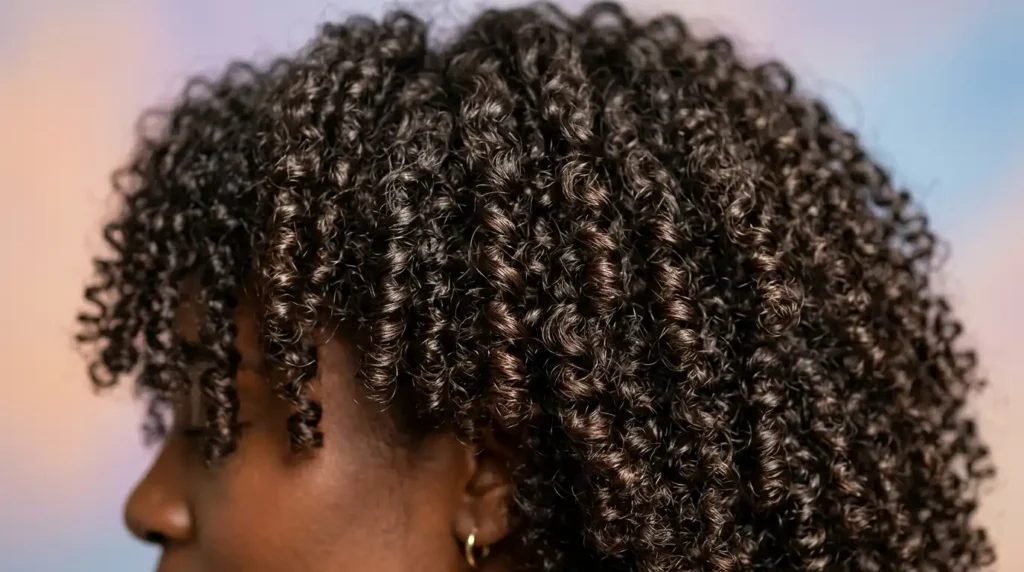
In contrast to straight or wavy textures, curly hair types range from loose, bouncy loops to tight, springy corkscrews. Unlike wavy strands, curly hair types have clear, defined spirals even when wet. According to scientific research on hair structures, because the scalp oils find it difficult to travel down spiral shapes, these textures require deep hydration.
Type 3A Hair
Type 3A features large, shiny, and loose curls that are roughly the width of sidewalk chalk. They have a beautiful natural bounce but can easily lose definition if weighed down by heavy creams.
Type 3B Hair
Type 3B hair consists of tighter, springier curls about the circumference of a marker. These curls have moderate shrinkage and require leave-in conditioners to maintain moisture and prevent frizz.
Type 3C Hair
Type 3C features tight corkscrew curls that are densely packed together, about the width of a pencil. It has high volume and significant shrinkage. Deep conditioning and curl-defining gels are essential for this type.
Type 4: Coily / Kinky Hair (4A, 4B, 4C)
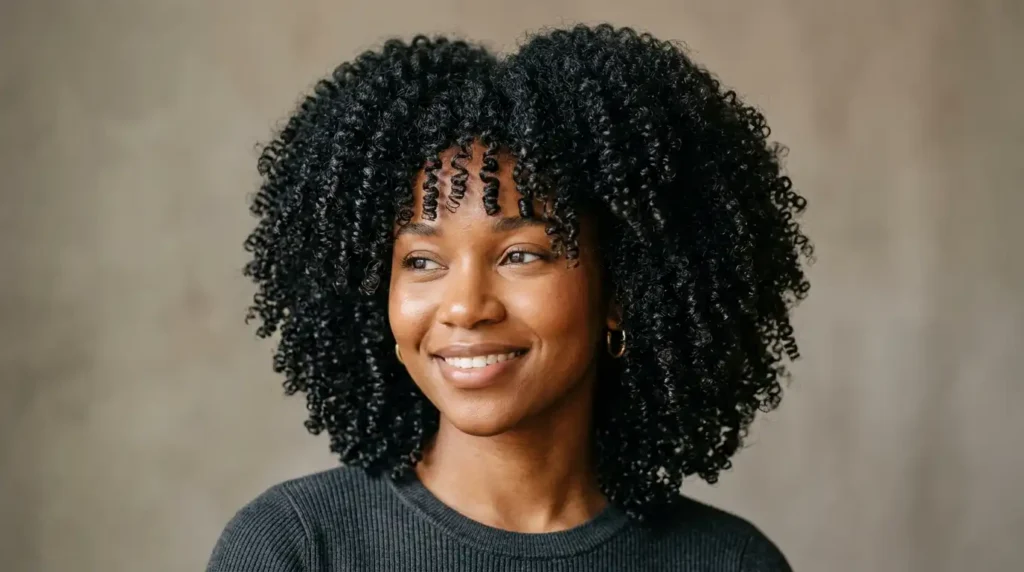
Coily hair types are the most fragile of all patterns. They feature very tight, small coils that form “Z” or sharp “S” shapes. Because coily hair types are highly dense, they are naturally dry and prone to breakage. They experience the highest percentage of shrinkage (up to 75% of their actual length).
Type 4A Hair
Type 4A hair features tightly coiled “S” pattern strands. The coils are dense but have a visible pattern that retains moisture slightly better than other Type 4 sub-types.
Type 4B Hair
Type 4B has a sharp “Z” pattern with less defined coils. The hair bends at sharp angles rather than curving. It feels very soft but requires heavy butters and protective styling to prevent tangling and damage.
Type 4C Hair
Type 4C is the tightest and most delicate coil pattern. The strands are so tightly packed that there is almost no visible curl pattern unless styled. It experiences massive shrinkage and requires maximum moisture, daily hydration, and gentle handling.
Caring for delicate coils requires a specialized approach. Read our step-by-step daily routine: The Ultimate Care Routine for Healthy and Thick 4C Hair.
Universal Rules for All Hair Types
While different hair types require unique daily products, keeping your strands healthy relies on a few fundamental practices:
- Keep It Clean without Stripping: Use a high-quality clarifying shampoo regularly to remove product buildup without stripping your scalp’s natural defense barriers.
- Deep Condition: Moisturize your mid-lengths to ends every week to support all hair types.
- Protect at Night: Use a silk or satin pillowcase or wear a bonnet to reduce friction and breakage while you sleep.
- To find the perfect formula for your scalp, check out our curated guide: The Ultimate Clarifying Shampoo Guide for Clean Hair.
- Build your personalized daily routine with our expert advice: The Absolute Best Hair Care Routine for Healthy Hair