
Type 1C Hair: The Ultimate Guide to Mastering Your “In-Between” Texture
Click here to read our Ultimate Hair Types Guide to find your natural hair pattern! If you have ever stared into the mirror, frustrated that your hair refuses to stay pin-straight but also won’t commit to a defined wave, you are likely part of the exclusive club of 1c hair owners. For years, the beauty industry has obsessed…
Click here to read our Ultimate Hair Types Guide to find your natural hair pattern!
If you have ever stared into the mirror, frustrated that your hair refuses to stay pin-straight but also won’t commit to a defined wave, you are likely part of the exclusive club of 1c hair owners. For years, the beauty industry has obsessed over tight curls or bone-straight locks, leaving those with this unique texture feeling misunderstood.
You aren’t alone, and more importantly, your hair isn’t “broken.” It simply requires a specific strategy that bridges the gap between straight and wavy care.
Understanding 1c hair type is the first step toward unlocking its full potential. Unlike the ultra-fine strands of 1a hair or the distinct S-waves of 2a curls, type 1C sits in a fascinating middle ground. It possesses the body and thickness of wavy hair but maintains the root structure of straight hair.
This guide will dive deep into what makes this texture unique, how to differentiate it from type 2a hair, and provide an expert-level routine to eliminate frizz, boost shine, and celebrate your natural texture.
Table of Contents
What Exactly Is 1C Hair?
Type 1C is often described as the “rebellious” member of the straight hair family. While it falls under the Type 1 category (straight), it defies the typical rules associated with it. If you look at 1a hair, you see strands that are incredibly fine, soft, and refuse to hold any shape or curl.
They lie flat against the scalp and can often look oily quickly. On the other end of the spectrum, we have 2a type hair, which features loose, beachy S-waves that start closer to the root.
1c hair distinguishes itself through its coarse texture and substantial body. The strands are thicker and more resilient than other straight types. Visually, 1C hair lies relatively flat at the roots but begins to show subtle bends, arcs, and volume starting from the mid-lengths down to the ends.
These ends often have a tendency to curl inward toward the chin or flick outward slightly, creating a silhouette that is neither completely linear nor fully waved.
The defining characteristic of 1c hair type is its struggle with friction. Because the strands are coarser, they are highly prone to frizz, flyaways, and “poofiness,” especially in humid conditions. Many people mistakenly believe they have 2a curls because of this volume, but the key difference lies in the pattern.
True 2a curls form a visible wave pattern even when air-dried without product. In contrast, 1c hair tends to dry mostly straight with occasional kinks or bends, lacking the uniform wave formation of the Type 2 category.
Differentiating 1C from 1B, 2A, and Other Types
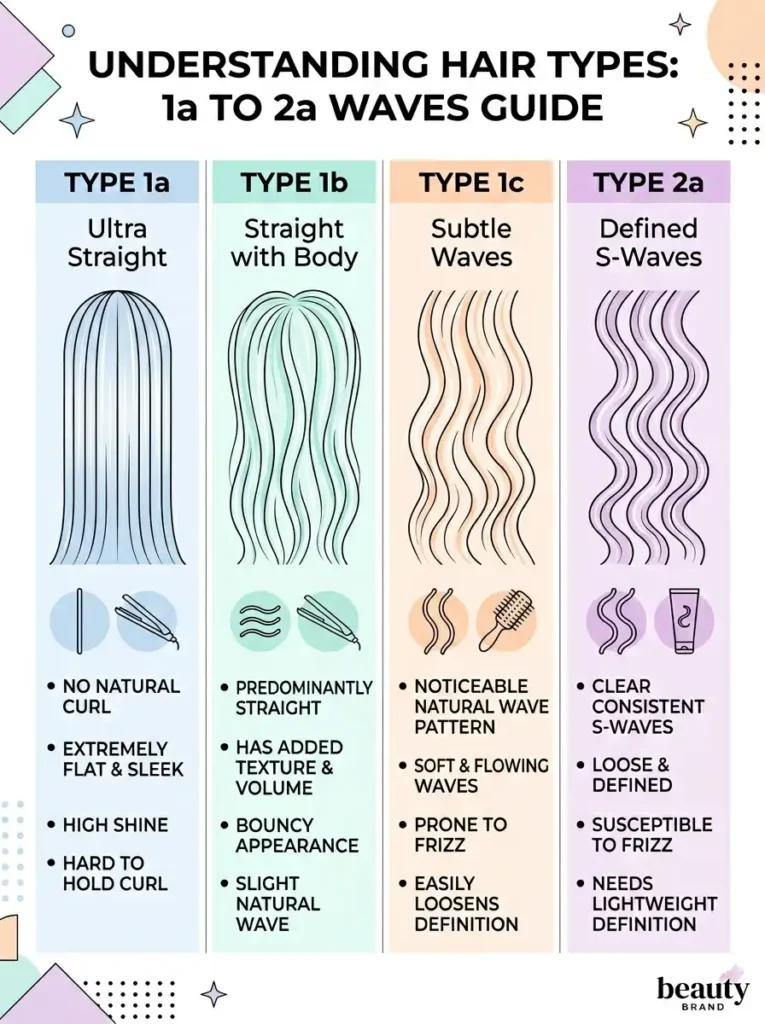
One of the most common sources of confusion in the hair community is distinguishing between 1c hair and its neighbors on the typing scale.
Misidentifying your hair type can lead to using the wrong products, resulting in greasy roots or dry, brittle ends. Here is how to tell them apart with precision.
The Battle of Body: 1B vs. 1C
Type 1B hair has more body than 1A but lacks the distinct bends of 1C. If your hair has some volume but dries perfectly straight without any flicks or curves at the ends, you are likely 1B.
1c hair, however, will always display some level of texture or bending in the lower half of the shaft. Furthermore, 1C strands are noticeably thicker and coarser to the touch compared to the medium texture of 1B.
The Wave Threshold: 1C vs. 2A
This is the most critical distinction. When analyzing type 2a hair versus 1c hair, look at the root and the pattern consistency. 2a type hair forms a gentle “S” shape that is visible throughout the length, giving that classic “bedhead” beach wave look immediately after washing.
1c hair does not have this consistent S-pattern. Instead, it hangs straighter at the top and only develops irregular bends or volume lower down. If you apply a curl cream and your hair turns into defined waves, you might actually be a low-porosity 2a curls candidate. If the cream just weighs your hair down and makes it look stringy, you are firmly in the 1c hair camp.
The Rarity Factor: 1A vs. 1C
It is worth noting that 1a hair is actually the rarest hair type globally, predominantly found in individuals of Asian descent. It is characterized by extreme straightness and fineness. 1c hair is much more common across various ethnicities but is often mislabeled as “unruly straight” hair.
Recognizing that you have the thicker, coarser texture of 1C rather than the fine nature of 1A changes your entire approach to hydration and styling.
The Unique Challenges of Managing 1C Texture
Owning 1c hair type comes with a specific set of challenges that require a tailored approach. The primary issue is the dichotomy between the scalp and the ends.
The roots of 1C hair can produce oil relatively quickly, similar to straight hair types, leading to a flat, greasy appearance at the crown if not managed correctly. However, due to the coarse nature of the strand, the natural oils from the scalp struggle to travel down the hair shaft.
This results in the infamous “dry end, oily root” scenario. The mid-lengths and ends of 1c hair are prone to severe dryness, split ends, and breakage. Additionally, the coarse texture makes this hair type highly susceptible to environmental humidity.
Unlike 1a hair, which might just get slightly limp in humidity, 1c hair reacts by expanding, creating a halo of frizz and losing its sleek appearance. This is why many with 1c hair feel their hair looks “poofy” rather than voluminous. Understanding that your hair needs moisture at the ends but lightweight care at the roots is the golden rule of management.
Expert Care Routine for Healthy 1C Hair
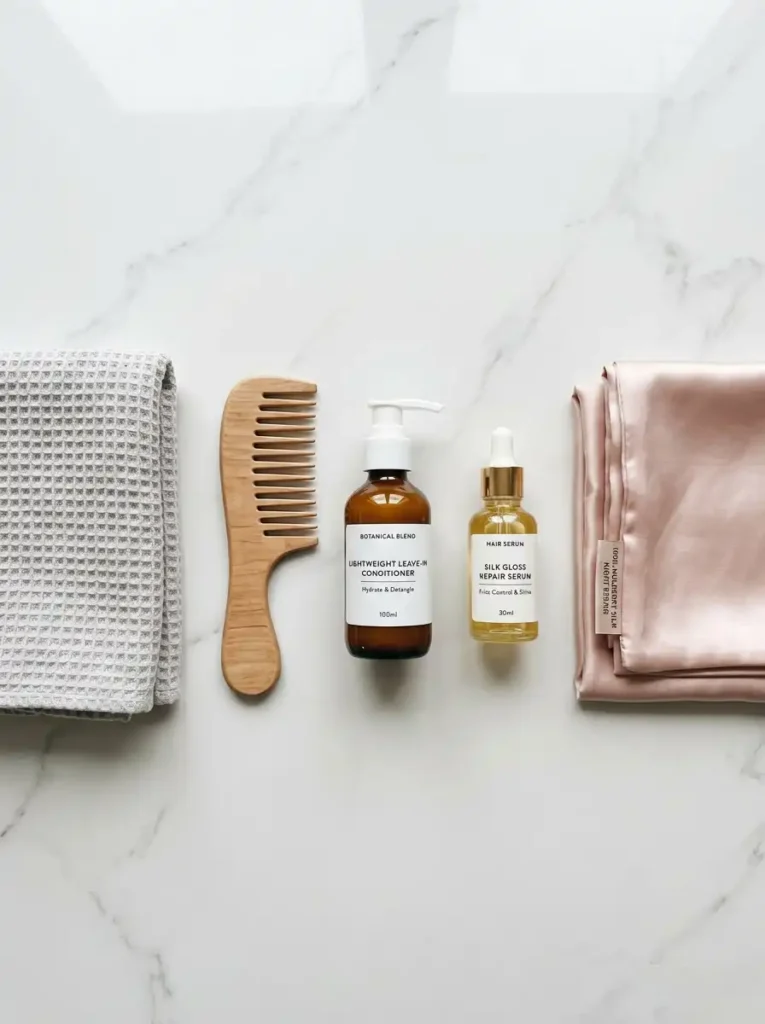
To transform your 1c hair from frizzy and unmanageable to sleek and vibrant, you need a routine that respects its coarse texture while avoiding weighing it down. Here is a comprehensive strategy designed to balance hydration and structure.
Strategic Washing and Conditioning
Over-washing is the enemy of 1c hair type. Washing daily strips the scalp of natural oils, triggering an overproduction of sebum that makes roots greasy faster, while simultaneously drying out the coarse ends. Aim to wash your hair three to four times a week.
When you do wash, focus your shampoo strictly on the scalp to remove buildup. Avoid scrubbing the lengths, as the suds running down are sufficient to clean the rest of the strand.
For conditioning, flip the script. Apply a hydrating conditioner generously from the mid-lengths to the very tips. Let it sit for at least three to five minutes to penetrate the coarse cuticle.
Avoid applying heavy conditioners to your roots, as this will flatten the natural body of 1c hair and accelerate oiliness.
The Art of Drying and Frizz Control
How you dry your hair determines 80% of your final look. Rough drying with a standard cotton towel creates friction that roughens the cuticle of 1c hair, leading to immediate frizz.
Switch to a microfiber towel or an old cotton t-shirt to gently squeeze out excess water. Never rub.
Heat protection is non-negotiable. Because 1c hair is coarse, it often requires higher heat settings to style, which increases the risk of damage. Always apply a lightweight heat protectant spray before using any hot tools.
If you prefer air-drying, apply a leave-in serum or a lightweight texturizing foam to the damp ends. This helps weigh down the frizz slightly and encourages those natural bends to clump together nicely, preventing the “scraggly” look that can happen when 1c hair dries unevenly.
Nighttime Protection
Frizz often happens while you sleep. Cotton pillowcases absorb moisture from your hair and create friction that causes tangles and breakage in 1c hair type. Invest in a silk or satin pillowcase.
These materials allow your hair to glide smoothly, preserving moisture and keeping your style intact overnight. For extra protection, loosely braid your hair or tie it in a low, loose bun with a silk scrunchie before bed.
Styling Tips and Product Recommendations for 1C Hair
Styling 1c hair is all about enhancement rather than transformation. You don’t need to force it into tight curls like 2a curls, nor do you need to flatten it completely like 1a hair. The goal is a polished, textured look that embraces your natural body.
The Power of Layers
When visiting your stylist, ask for long layers. Blunt cuts can sometimes make 1c hair look triangular or heavy at the bottom. Long layers remove weight from the mid-sections, allowing the natural bends to pop and reducing the “poof” factor.
If you have finer 1c hair, avoid short layers near the crown, as they may stick up; instead, opt for face-framing layers to add movement.
Product Selection Guide
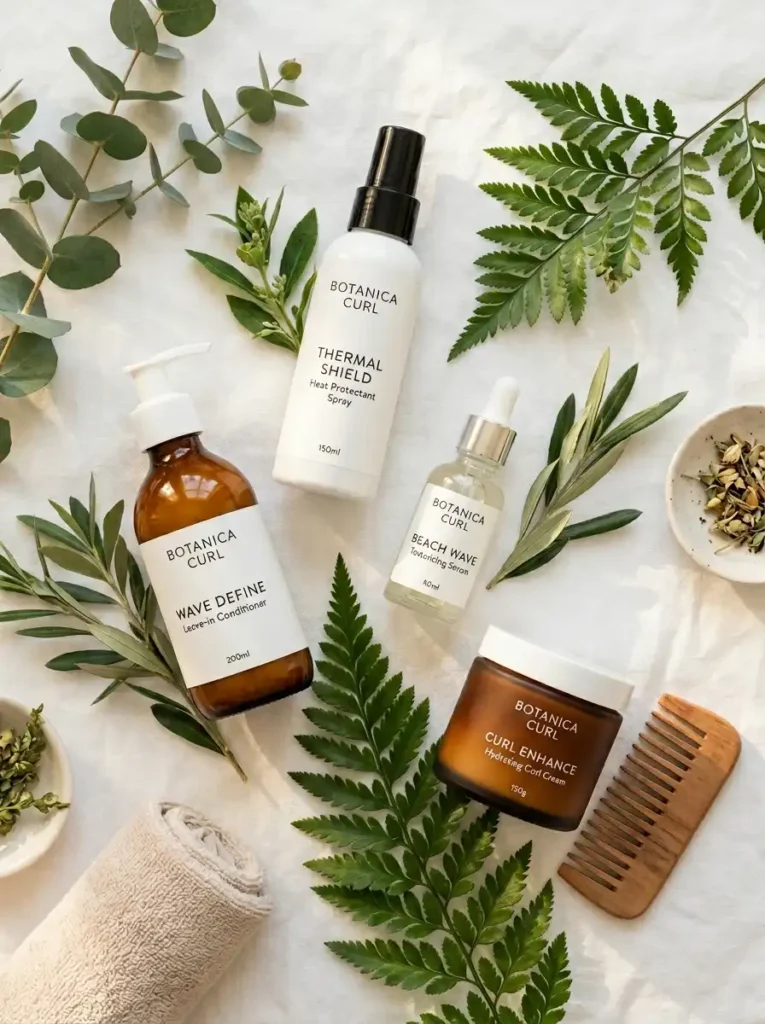
Choosing the right products is crucial. Heavy butters and thick creams designed for curly hair will suffocate 1c hair, making it look greasy and limp.
Conversely, volumizing mousses designed for fine hair might not provide enough control for your coarse strands.
- For Hydration: Look for lightweight serums containing argan oil or jojoba oil. Apply these only to the ends to seal in moisture without slicking down the roots.
- For Texture: A sea salt spray can be a game-changer for 1c hair type. It adds grit and definition to those subtle bends, giving you that effortless, lived-in look without the heaviness of a curl cream.
- For Frizz Control: Anti-humidity sprays are essential. Look for formulas that create a barrier against moisture in the air to keep your 1c hair smooth throughout the day.
Embracing the Natural Finish
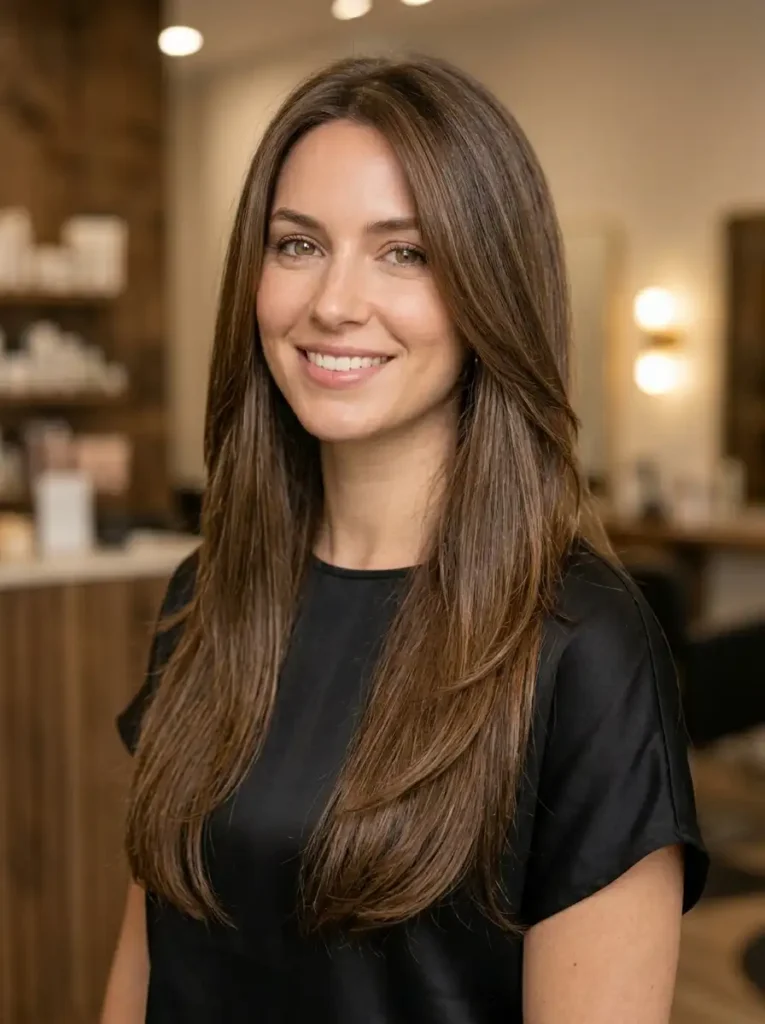
The most flattering style for 1c hair is often its natural state, enhanced. After washing, scrunch a small amount of texturizing cream into damp hair and let it air dry. Once dry, use a flat iron or curling wand to touch up just the ends, curving them inward or outward to create a cohesive shape.
This method gives you the polish of a blowout with the ease of air-drying. Remember, your hair type is versatile; it can hold a curl better than 1a hair but offers more sleekness than 2a type hair. Use this to your advantage by alternating between sleek ponytails and textured, loose styles.
Final Thoughts on Embracing Your 1C Texture
Navigating the world of hair care with 1c hair can feel like walking a tightrope between straight and wavy, but once you understand its unique needs, it becomes your greatest asset.
By recognizing the differences between your coarse, bend-prone strands and the fine nature of 1a hair or the defined waves of type 2a hair, you can curate a routine that works specifically for you. Focus on balancing hydration at the ends with volume at the roots, protect your strands from friction, and choose lightweight products that enhance rather than overwhelm.
Your 1c hair type is not a compromise; it is a distinct, beautiful texture capable of stunning versatility when treated with the right knowledge and care.