
Hair Breakage: Causes, Treatments, and How to Stop It for Good
If your hair feels weak, snaps easily, or seems shorter despite never cutting it, you are likely dealing with hair breakage. Unlike hair loss, which occurs at the root, hair breakage happens along the hair shaft — and the good news is that it is almost always preventable and treatable with the right approach. In this complete guide,…
If your hair feels weak, snaps easily, or seems shorter despite never cutting it, you are likely dealing with hair breakage. Unlike hair loss, which occurs at the root, hair breakage happens along the hair shaft — and the good news is that it is almost always preventable and treatable with the right approach.
In this complete guide, you will learn exactly what causes hair breakage, how to identify it, and the most effective ways to restore your hair’s strength and health for good.
Table of Contents
What Is Hair Breakage?
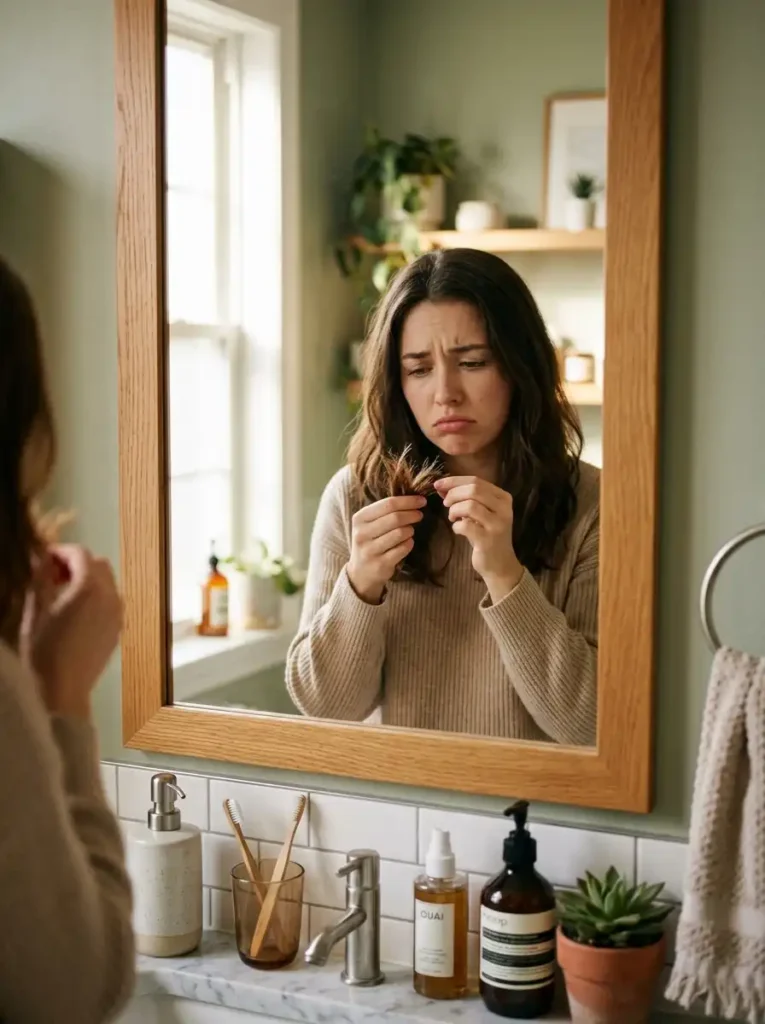
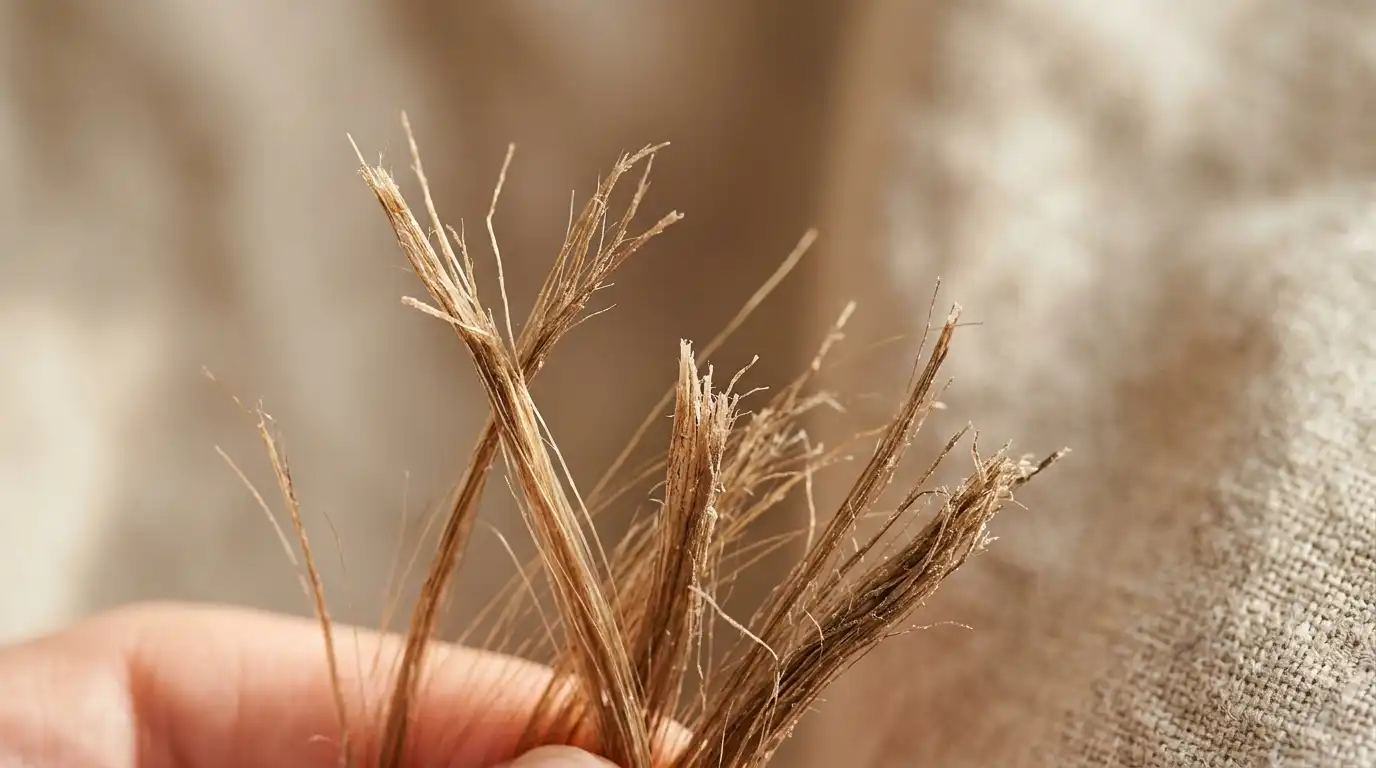
Hair breakage occurs when the hair shaft becomes weak and snaps off somewhere along its length — not at the root. This is different from normal hair shedding, where the full strand including the bulb falls out naturally as part of the hair growth cycle.
Signs you are dealing with hair breakage rather than hair loss:
- Short, uneven pieces of hair falling out with no white bulb at the end
- Hair that feels rough, dry, or brittle
- Split ends that travel up the shaft
- Strands that tangle and knot easily
- Thinning at the ends rather than the scalp
- Hair that seems to stop growing or stay the same length
Understanding your hair type is the first step to addressing weak, damaged strands effectively. Visit our Ultimate Guide to Hair Care for Different Hair Types to identify your hair type and its specific vulnerabilities.
What Causes Hair Breakage?
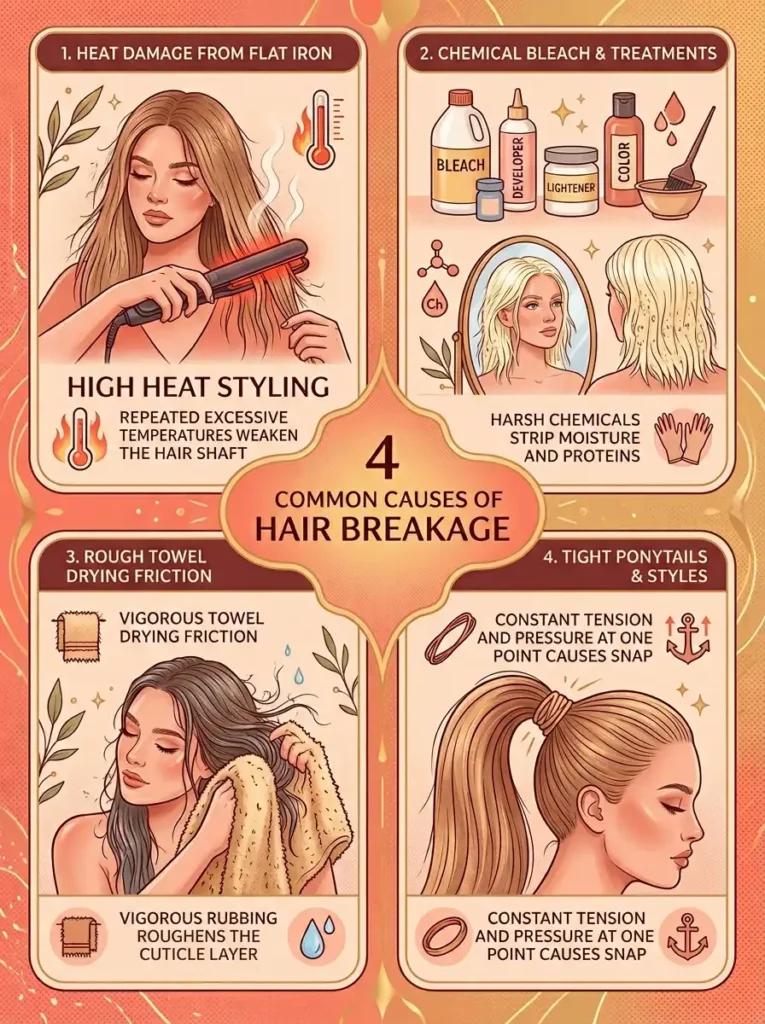
Brittle, snapping hair rarely has one single cause. In most cases, it results from a combination of damaging habits, product choices, and environmental factors that weaken the hair shaft over time.
1. Lack of Moisture
Dry hair is brittle hair. When strands lack adequate hydration, they lose elasticity and snap under even minor stress. This is one of the most common causes of hair breakage, especially in curly and coily textures where natural oils from the scalp struggle to travel down the shaft.
2. Excessive Heat Styling
Flat irons, curling wands, and blow dryers strip moisture from the hair shaft every time they are used. Repeated heat exposure without protection weakens the internal structure of your strands, making breakage almost inevitable over time.
3. Over-Processing and Chemical Damage
Bleaching, coloring, relaxing, and perming all alter the structure of the hair shaft. When done too frequently or without proper care, these processes lead to serious hair breakage. Before any chemical treatment, always read our guide on how to prevent damage when coloring hair.
4. Protein and Moisture Imbalance
Hair needs a balance of both protein and moisture to stay strong and flexible. Too much protein makes strands stiff and prone to snapping. Too little protein makes them weak and mushy. Both imbalances lead to increased breakage and damage.
5. Harsh Shampoos and Sulfates
Shampoos containing sulfates strip the hair of its natural oils, leaving it dry and vulnerable. Switching to a sulfate-free shampoo is one of the most impactful changes you can make to reduce ongoing damage.
6. Rough Handling and Mechanical Damage
Aggressive brushing, towel-rubbing wet hair, tight hairstyles, and sleeping on rough cotton pillowcases all create friction and physical stress that weakens strands over time.
7. Product Buildup
When styling products and heavy oils accumulate on the shaft without regular clarifying, they block moisture and cause dryness. A regular reset with a clarifying shampoo keeps the hair clean and receptive to hydration.
8. Poor Nutrition and Dehydration
Hair is made of keratin — a protein. A diet lacking in protein, iron, zinc, biotin, and vitamins A, C, D, and E can weaken strands from the inside, making hair breakage more likely regardless of your external haircare routine.
9. Tight Styles and Elastic Bands
Tight ponytails, buns, and rubber elastic bands create concentrated tension at specific points on the shaft, causing snapping and damage at exactly those spots. This is called traction breakage and is extremely common.
Hair Breakage Treatment: How to Fix It

1. Deep Condition Weekly
Deep conditioning is the single most effective treatment for moisture-starved, brittle hair. A rich conditioner penetrates the shaft, restores elasticity, and dramatically reduces snapping and splitting. Use a treatment containing shea butter, avocado oil, aloe vera, amino acids, or keratin once every week.
2. Use a Protein Treatment
If your hair feels mushy, stretches excessively, or lacks strength, a protein treatment can rebuild the internal structure of the shaft. Use a protein mask once a month — overuse leads to further brittleness and damage.
3. Switch to a Sulfate-Free Shampoo
Harsh sulfate shampoos dry out the hair with every wash. A gentle sulfate-free shampoo preserves natural oils, keeps the cuticle smooth, and significantly reduces ongoing hair breakage.
4. Always Use Heat Protectant
Before using any heat tool, apply a protectant from root to ends. It forms a barrier around the shaft that reduces moisture loss and structural damage during styling — essential for anyone battling heat-related damage.
5. Clarify Regularly
Product buildup prevents moisture from penetrating the shaft, which worsens brittleness. Use a clarifying shampoo every two to four weeks to reset your hair and allow treatments to actually absorb.
6. Trim Split Ends
Split ends do not repair themselves — they travel up the shaft and worsen existing damage. Regular trims every 8 to 12 weeks are essential to stop breakage from spreading further.
7. Handle Wet Hair Gently
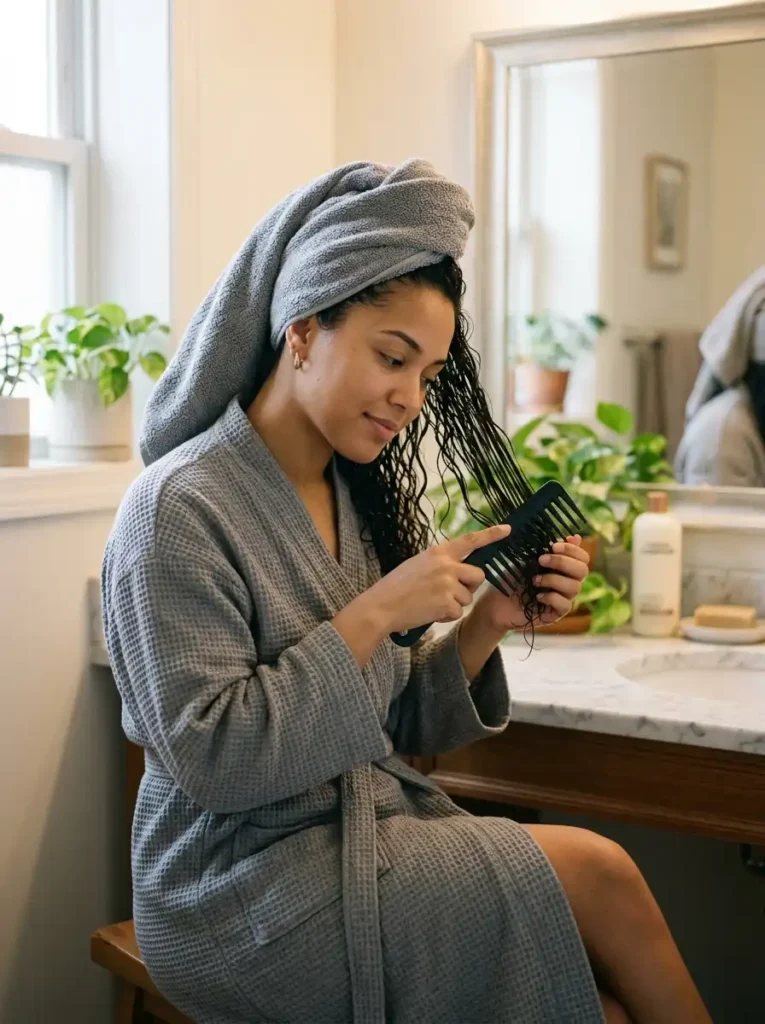
Hair is at its most fragile when wet. Never rub it with a towel — instead, gently squeeze out excess water with a microfiber towel or cotton t-shirt. Detangle with a wide-tooth comb starting from the ends and working upward.
8. Sleep on Silk or Satin
Cotton pillowcases create friction that pulls on strands all night. Switching to a silk or satin pillowcase — or wearing a satin bonnet — eliminates this friction and reduces overnight damage significantly.
How to Prevent Hair Breakage
Prevention is always more effective than treatment. Here are the most important habits to build into your routine.
Moisturize consistently — Do not wait for your hair to feel dry before adding moisture. Stay ahead of dryness with regular leave-in conditioners and weekly deep treatments.
Limit heat styling — Reduce how often you use flat irons and curling wands. Embrace air drying and heat-free styling methods whenever possible.
Avoid tight hairstyles — Give your hair regular breaks from tight ponytails and braids. Use soft fabric hair ties instead of rubber elastics.
Build a solid routine — A consistent hair care routine covering cleansing, conditioning, moisturizing, and protecting will significantly reduce damage over time.
Eat for hair health — Include protein-rich foods, leafy greens, eggs, nuts, and plenty of water daily to support strength from within.
Breakage by Hair Type

Straight Hair (Type 1)
Straight hair is prone to damage from heat overuse and overwashing. Focus on avoiding harsh products that strip natural oils.
Wavy Hair (Type 2)
Wavy hair struggles with tangles that lead to mechanical damage. Gentle detangling and lightweight moisturizing products are key.
Curly Hair (Type 3)
Curly hair is naturally drier and more prone to snapping at the bends and curves of each curl. Deep conditioning and the LOC method are highly effective.
Coily and 4C Hair (Type 4)
Coily hair experiences the highest rate of damage due to its tightly packed structure and extreme dryness. For a complete routine to prevent hair breakage in coily textures, see our full 4C hair care routine guide.
FAQs About Hair Breakage
Q: What is the difference between hair breakage and hair loss?
Hair loss occurs at the root with the bulb visible. Hair breakage happens along the shaft with no bulb at the broken end.
Q: How do I know if I have hair breakage?
Look for short pieces of hair with no white bulb at the end, rough texture, split ends, and strands that tangle easily.
Q: How long does it take to fix?
With consistent treatment, most people see improvement in 4 to 8 weeks. Severely damaged hair may take 3 to 6 months to fully recover.
Q: Can it be reversed?
Already-broken strands cannot be repaired, but you can stop new breakage and strengthen remaining hair significantly with the right routine.
Q: What is the best product for hair breakage?
A sulfate-free shampoo, weekly deep conditioner, monthly protein treatment, and consistent heat protectant use address damaged hair from multiple angles simultaneously.
Q: Does trimming help?
Yes. Trimming removes split ends and prevents them from traveling further up the shaft, making it one of the most effective preventive measures against hair breakage.
Final Verdict

Weak, brittle strands are frustrating — but highly fixable. By understanding what weakens your hair and targeting those causes directly, you can rebuild strength and stop the cycle of damage for good.
Start with the basics: switch to a sulfate-free shampoo, deep condition every week, handle your hair gently, and follow a consistent hair care routine. With patience and the right products, strong, healthy, breakage-free hair is absolutely achievable.