Daith Piercing 101: How to Avoid Pain and Infection in 2026
Choosing to get a daith piercing is about more than just following a trend; it is a commitment to a unique aesthetic that sits at the very heart of your ear’s anatomy. Located in the smallest fold of cartilage just above the ear canal, the daith has become a centerpiece in the “curated ear” movement….
Choosing to get a daith piercing is about more than just following a trend; it is a commitment to a unique aesthetic that sits at the very heart of your ear’s anatomy. Located in the smallest fold of cartilage just above the ear canal, the daith has become a centerpiece in the “curated ear” movement. Whether you are drawn to it for its edgy look or you have heard the buzz about its potential wellness benefits, understanding the technicalities of this specific piercing is crucial for a successful healing journey.
Table of Contents
What Exactly is a Daith Piercing?
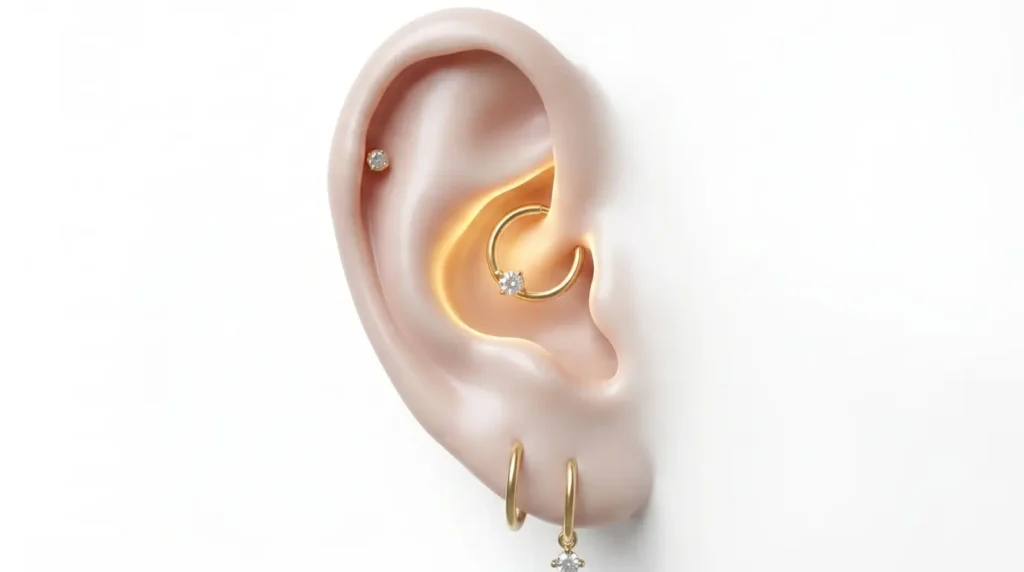
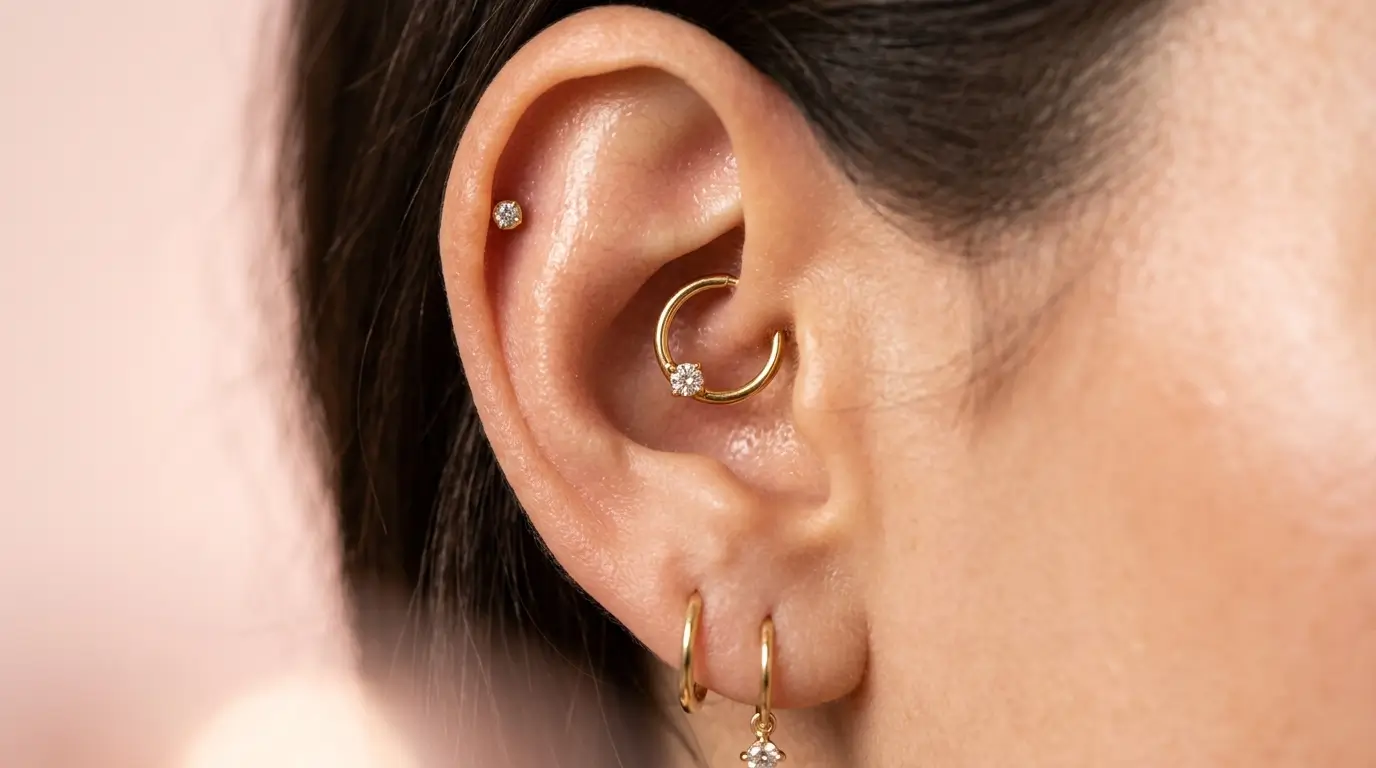
To understand the daith piercing, you first have to look at the crus of the helix. This is the innermost piece of cartilage that curls into the center of your ear. Because of its tucked-away location, the piercing appears to emerge directly from the ear canal, giving it a distinct, symmetrical look that few other ear piercings can match.
Unlike a helix or lobe piercing, the daith requires a high level of precision. It is a “pressure” piercing, meaning the piercer must navigate a thick, curved piece of cartilage. This is why selecting a professional piercer with a deep portfolio of daith work is non-negotiable.
The Jewelry Guide: Choosing Your First Daith Piercing Piece
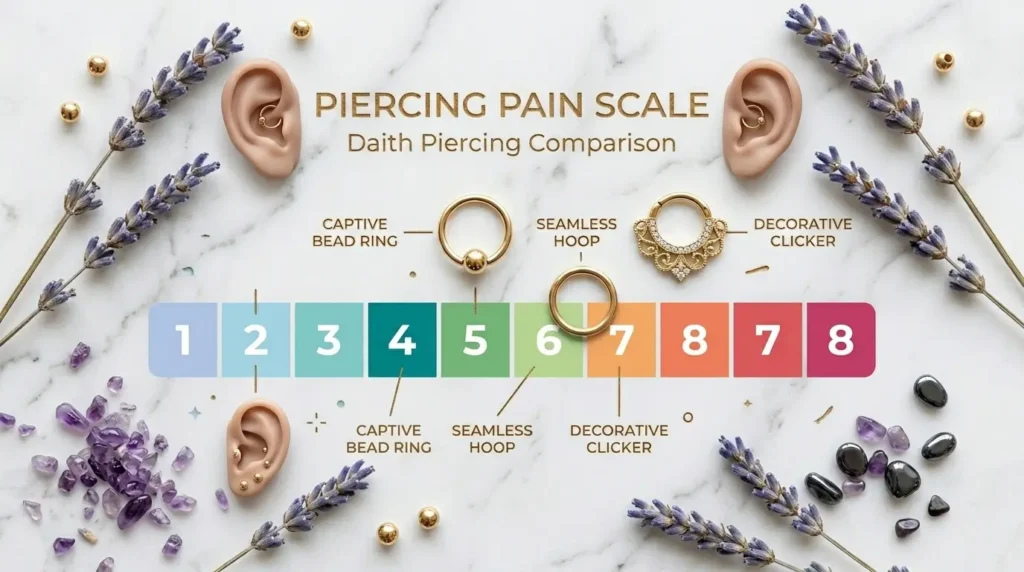
The jewelry you choose for your initial daith piercing isn’t just about style; it’s about biology. Cartilage swells, and your jewelry needs to accommodate that movement without causing irritation.
Captive Bead Rings (CBRs) and Hoops
Hoops are the gold standard for daith piercings. Because the piercing site is tucked away, a ring “hugs” the cartilage perfectly. Captive bead rings offer a secure fit that won’t snag easily on hair or clothing, which is the leading cause of piercing bumps.
Clicker Earrings
Once you are fully healed, clickers are the most popular choice. These feature a hinged mechanism that “clicks” into place. They allow for intricate designs—from minimalist gold bands to diamond-encrusted opulence—making them the favorite for those looking to elevate their jewelry game.
Curved Barbells
While hoops are more common, some piercers prefer starting with a curved barbell if your ear anatomy is particularly tight. This can sometimes lead to a faster initial healing phase because the jewelry moves less than a large hoop, though many find the aesthetic less traditional for a daith.
The Reality of Daith Piercing Pain: What to Expect
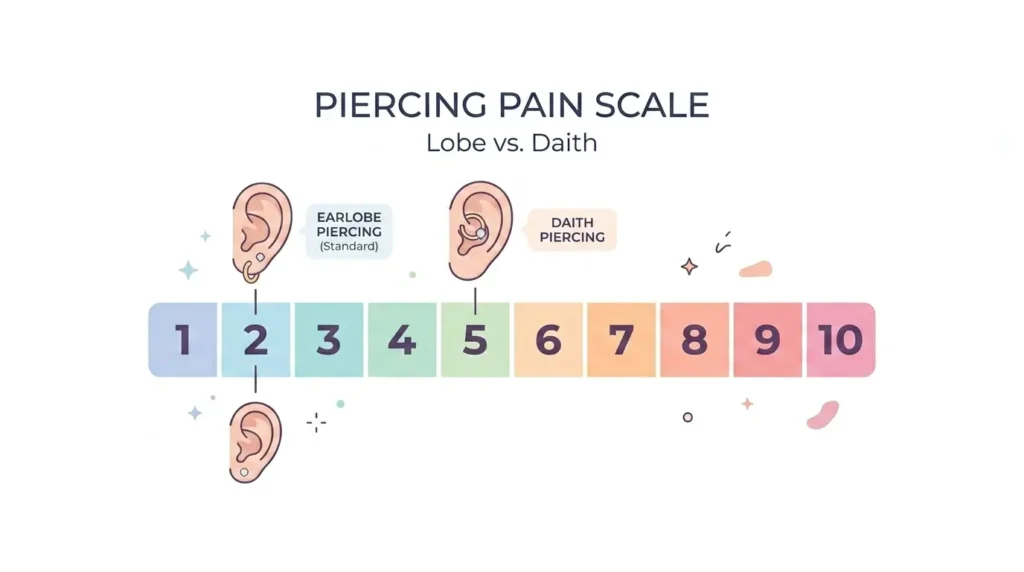
It’s the question everyone asks: how much does a daith piercing hurt? On a universal pain scale, most enthusiasts rank it a 5 or 6 out of 10. However, the sensation is different from other piercings.
Instead of the “sharp sting” associated with the lobe or the “quick pinch” of a helix, a daith feels like a heavy, dull pressure. This is because the needle is passing through a denser, thicker fold of cartilage. You might also hear a “crunch” sound during the procedure—this is perfectly normal and is simply the sound of the needle passing through the firm cartilage close to your ear canal.
The good news? The actual piercing process takes less than five seconds. The “throb” usually subsides within an hour, leaving you with a dull ache that disappears within a few days.
The 2026 Aftercare Protocol: Healing Your Daith Piercing
A daith piercing typically takes 6 to 12 months to heal completely. Because it is located so close to the ear canal, it is prone to moisture trap and bacterial buildup if not managed correctly.
The NeilMed/Saline Method
Forget the homemade salt soaks of the past. Modern professional standards recommend a sterile saline spray (0.9% sodium chloride). Spray the front and back of the piercing twice a day. Do not use cotton buds, as the tiny fibers can wrap around the jewelry and cause “irritation bumps.”
The “LITHA” Rule
LITHA stands for “Leave It The Hell Alone.” The more you touch, rotate, or “check” the piercing, the more bacteria you introduce. Every time the jewelry moves, it breaks the tiny tube of healing skin (the fistula) forming inside.
Sleeping and Headphones
You must avoid sleeping on your new piercing for at least 3 to 4 months. Use a “donut” or travel pillow to keep your ear suspended in the air. Furthermore, you will need to swap your earbuds for over-the-ear headphones, as pressure from an AirPod can shift the angle of the piercing and lead to permanent migration.
The Migraine Myth: Does a Daith Piercing Actually Work?
Many people seek out a daith piercing specifically to treat migraines. The theory is based on acupuncture: the daith site corresponds to a pressure point linked to the digestive system and the vagus nerve, which some believe can alleviate headache pain.
While there is a massive amount of anecdotal evidence from people claiming their migraines vanished after the piercing, there is currently no clinical medical evidence to prove this. Most doctors attribute the relief to a “placebo effect.” If you are getting this piercing solely for medical reasons, go in with an open mind but realistic expectations. View the migraine relief as a potential “bonus” to a beautiful piece of body art.
Potential Side Effects and How to Spot Trouble
Even with perfect care, a daith piercing can be finicky. Being able to distinguish between normal healing and a true problem is key.
Piercing Bumps (Granulomas)
These are small, flesh-colored bumps that appear near the entry or exit hole. They are usually caused by irritation (sleeping on it) or improper jewelry angles. They are not infections; they are a sign that the ear is stressed.
Infection Signs
An infection is different from irritation. If you notice extreme heat, throbbing pain that gets worse after day three, or thick green/yellow discharge with an unpleasant odor, consult a doctor or your piercer immediately.
Anatomy Rejection
Not everyone has the “shelf” of cartilage required for a daith piercing. If your cartilage is too shallow, the piercing may “migrate” or move toward the surface. A professional piercer should tell you if your anatomy isn’t suited for it before they ever pick up a needle.

Why Your Choice of Piercer Matters Most
When it comes to the daith piercing, the angle is everything. If the piercing is too deep, it will be impossible to change the jewelry. If it’s too shallow, it will migrate out.
Look for a studio that uses an autoclave for sterilization and only stocks high-quality materials like Implant Grade Titanium or 14k/18k Gold. Avoid any shop that uses “surgical steel,” as this often contains nickel, which is the primary cause of allergic reactions in cartilage piercings.
Making the Commitment to Your Daith Piercing
The daith piercing is a journey, not a quick fix. It requires patience, a bit of an investment in high-quality jewelry, and a strict aftercare routine. However, the result is one of the most striking and sophisticated piercings available today.
By following the right protocols and listening to your body, you can ensure that your piercing remains a beautiful part of your signature look for years to come. If you are ready to take the plunge, start by researching the best piercers in your area and preparing your “healing kit” today.