

How to Get Radiant Hair With Gentle Hair Care Routine
Healthy, radiant hair doesn’t happen by accident. It’s the result of consistent, gentle hair care that protects your strands from damage while supporting growth from the root. If your hair feels dry, breaks easily, or looks dull, the problem is usually not your hair type but the way it’s being handled day to day. Building a gentle…
Healthy, radiant hair doesn’t happen by accident. It’s the result of consistent, gentle hair care that protects your strands from damage while supporting growth from the root. If your hair feels dry, breaks easily, or looks dull, the problem is usually not your hair type but the way it’s being handled day to day.
Building a gentle hair care routine is the simplest way to protect your strands and bring back their natural shine. In this guide, you’ll learn the exact gentle hair care practices and protective hairstyles that keep hair strong, shiny, and healthy, no matter your hair texture. These are simple habits you can start today.
Table of Contents
Why Gentle Hair Care Matters
Every time you brush roughly, use high heat, or pull your hair into tight styles, you create tiny stress points along each strand. Over time these add up to split ends, breakage, and thinning. Gentle hair care simply means reducing that daily stress so your hair can grow longer and stay healthier.
The goal of gentle hair care is simple: reduce daily stress on your hair so it can grow stronger and healthier. The good news is that small changes make a big difference fast.
1. Start With a Healthy Scalp

Beautiful hair starts at the scalp. Think of it like soil for a plant — if the foundation isn’t healthy, growth suffers.
- Use a sulfate-free shampoo to cleanse without stripping natural oils.
- Don’t over-wash. For most hair types, 2–3 times a week is enough.
- Add a gentle scalp massage for 2–3 minutes while washing to boost blood flow to the follicles.
- Exfoliate the scalp once a week if you have buildup from products.
Tip: Use lukewarm water, not hot. Hot water dries out the scalp and strands.
For a full step-by-step washing and conditioning plan, see our complete hair care routine.
2. Feed Your Hair From the Inside

What you eat shows up in your hair. A balanced diet rich in the right nutrients supports stronger, faster growth.
| Nutrient | Why It Helps | Food Sources |
|---|---|---|
| Protein | Hair is made of keratin (a protein) | Eggs, fish, beans, chicken |
| Omega-3 | Adds shine and reduces dryness | Salmon, walnuts, chia seeds |
| Biotin | Supports growth and strength | Eggs, nuts, sweet potato |
| Vitamin E | Protects follicles | Almonds, spinach, avocado |
| Iron | Prevents shedding | Leafy greens, lentils, red meat |
Drinking enough water every day also keeps hair from getting brittle.
3. Keep Your Hair Hydrated

Dryness is the number one cause of breakage. Locking in moisture keeps strands flexible and shiny.
- Apply a leave-in conditioner or hair moisturizer after washing.
- Do a deep conditioning mask once a week.
- Seal in moisture with a light natural oil (argan, jojoba, or coconut) on the ends.
- Avoid products with high alcohol content that dry the hair.
If you have textured or curly hair, hydration is even more important — check our full curly hair care guide for extra tips.
4. Handle Wet Hair With Extra Care
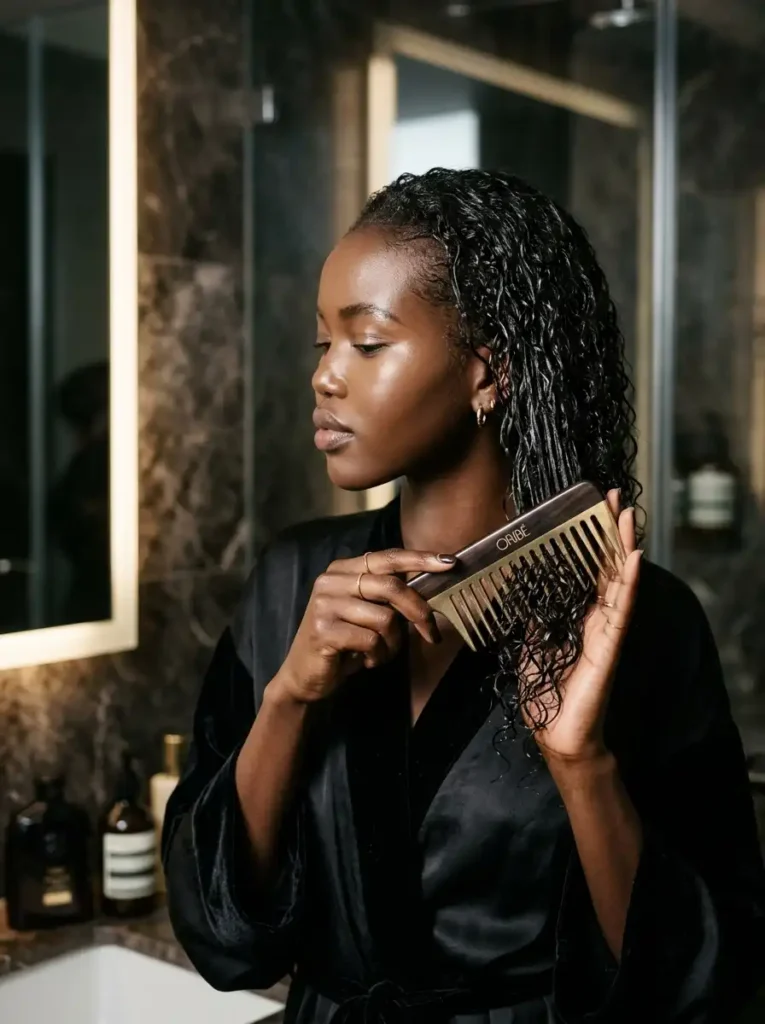
Wet hair is at its weakest and breaks most easily.
- Never brush hair when it’s soaking wet with a regular brush.
- Use a wide-tooth comb and detangle gently, starting from the tips and working upward.
- Pat dry with a soft microfiber towel or cotton t-shirt instead of rubbing with a rough towel.
5. Protective Hairstyles That Prevent Breakage
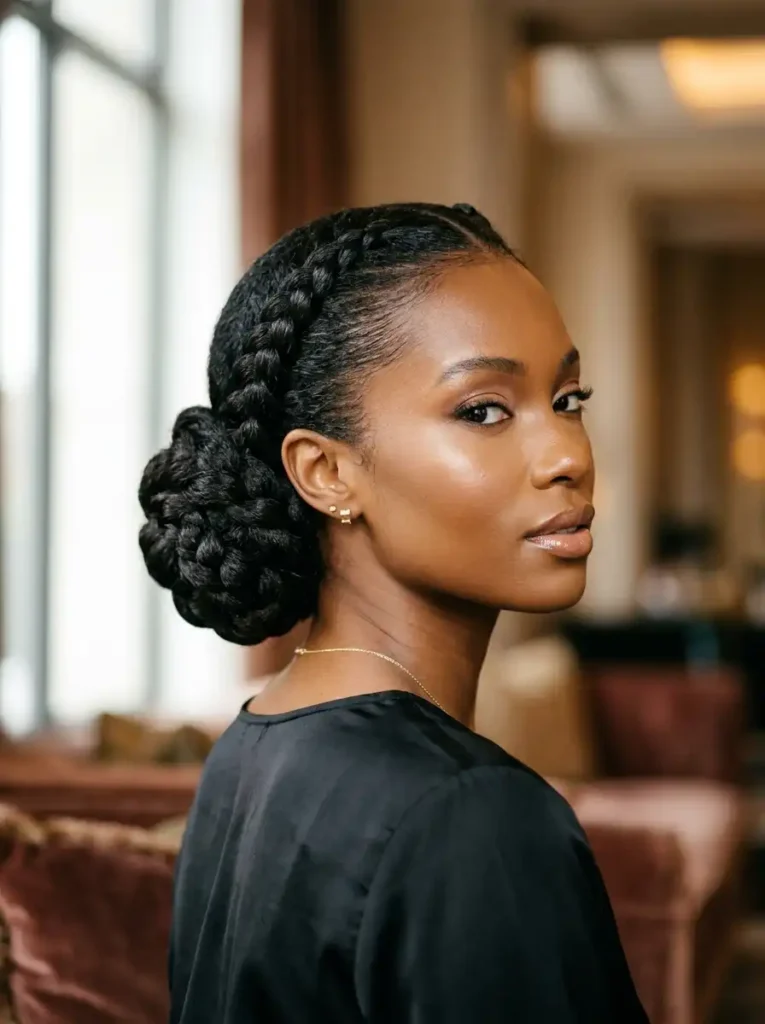
Protective styles are a key part of any gentle hair care plan because they keep your ends safe. They tuck away your ends and reduce daily manipulation, which means less breakage and more length retention.
- Loose braids — classic and gentle on the strands.
- Low buns — keep ends protected without tension.
- Twists — great for textured and curly hair.
- Loose low ponytails — use a soft fabric scrunchie, not a tight elastic.
Looking for easy ideas? Browse these short braids hairstyles for inspiration.
Important: Avoid styles that are too tight. If it hurts or pulls at your hairline, it’s causing damage (this can lead to traction alopecia over time).
6. Limit Heat and Sun Damage
- Always use a heat protectant before any hot tool.
- Keep heat tools on a medium setting, not the highest.
- Try air-drying when you can.
- Wear a hat or use UV-protectant spray in strong sun.
7. Trim Regularly
Trimming won’t make hair grow faster, but it stops split ends from traveling up the strand and causing more breakage. Aim for a trim every 6–8 weeks to keep ends healthy and fresh.
Not sure which cut suits you? Explore our hair types guide to understand your texture first.
8. Nighttime Hair Care

What you do at night protects your hair while you sleep.
- Sleep on a silk or satin pillowcase to reduce friction.
- Tie long hair in a loose braid or use a silk scarf.
- Never sleep with wet hair, as it’s fragile and prone to breakage.
With consistent gentle hair care, radiant and healthy hair becomes part of your everyday routine. Your hair deserves the best, and these simple habits put you on the path to a vibrant, head-turning mane.
Frequently Asked Questions
How often should I wash my hair?
For most people, 2–3 times a week is ideal. Washing too often strips natural oils and dries out the scalp.
Do protective hairstyles really help hair grow?
Yes — they don’t speed up growth, but they protect your ends and reduce breakage, so your hair retains more length over time.
What is the fastest way to get healthier hair?
Start with the basics: a gentle sulfate-free shampoo, weekly deep conditioning, less heat, and a silk pillowcase. You’ll notice a difference within a few weeks.
Why is my hair so dry even though I condition it?
Dryness often comes from hot water, too much heat styling, or hard water. Try lukewarm rinses, a weekly mask, and sealing your ends with a natural oil.