

Hair Is Curly: What It Means + Complete Care Guide (2026)
Hair Is Curly: The Complete Science-Backed Care Guide (2026) If your hair is curly, you are part of a large and diverse group of people whose hair has a unique structure, beauty, and set of needs. Curly hair can look absolutely stunning when it is properly cared for, but without the right knowledge and routine, it…
Hair Is Curly: The Complete Science-Backed Care Guide (2026)
If your hair is curly, you are part of a large and diverse group of people whose hair has a unique structure, beauty, and set of needs. Curly hair can look absolutely stunning when it is properly cared for, but without the right knowledge and routine, it can become dry, frizzy, and difficult to manage.
The problem is that most generic hair care advice is written for straight hair. People whose hair is curly are often left guessing which products to use, how often to wash, and why their curls never seem to look the way they want.
This guide changes that. We will go deep into the science of why hair is curly, break down every curl type in detail, give you a complete care routine, explain the most important concepts like porosity and the curl method, and help you build a system that actually works for your specific curl pattern in 2026.
Table of Contents
Why Is Hair Curly? The Real Science Behind It
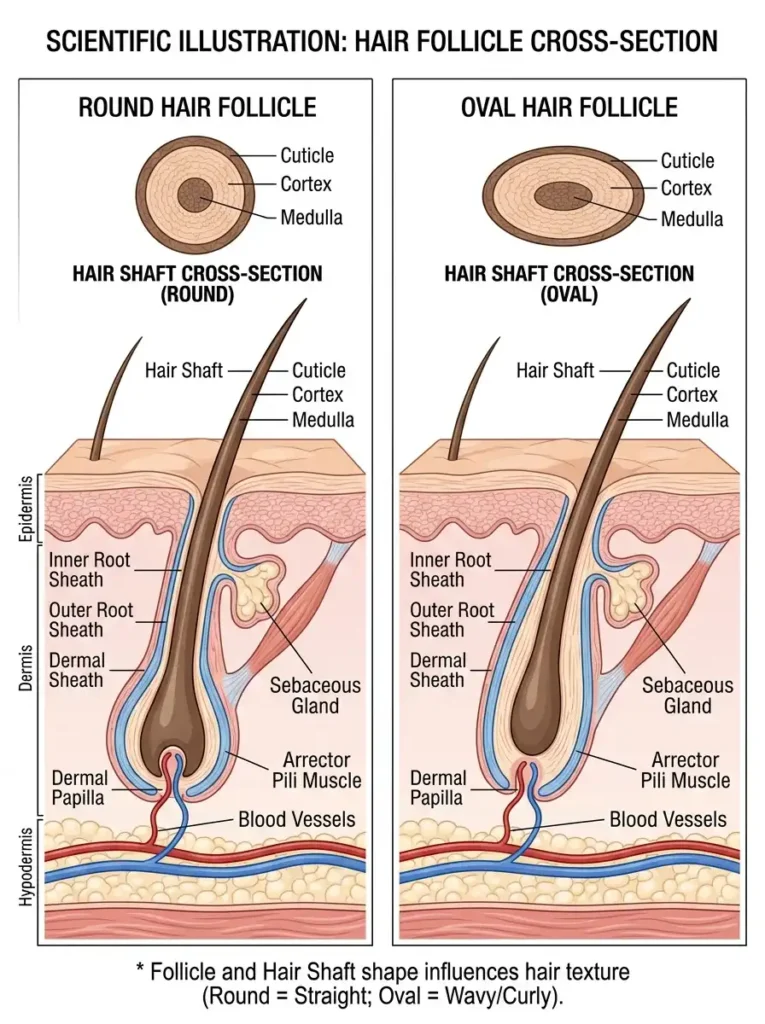
Most people think curly hair is just a style or a look. In reality, hair is curly because of its biology. There are three main scientific reasons why some people have curly hair and others have straight hair.
1. The Shape of Your Hair Follicle
The hair follicle is the small opening in your scalp where each strand of hair grows. If you have straight hair, your follicle is perfectly round. If your hair is curly, your follicle is oval or flat. The more flat the follicle is, the tighter and more coiled your curl will be.
As the hair grows through this oval or flat opening, it gets pushed to one side. This creates a natural bend or twist in every strand as it exits the scalp. This is the most important reason why hair is curly.
2. The Distribution of Keratin in the Hair Strand
Keratin is the protein that hair is made of. In straight hair, keratin is distributed evenly throughout the strand. In curly hair, the keratin is distributed unevenly. One side of the strand has more keratin than the other. This uneven distribution creates tension inside the strand, which causes it to curve and coil.
3. Disulfide Bonds
Inside every strand of hair, there are chemical bonds called disulfide bonds. The number and placement of these bonds determines how much curl your hair has. People whose hair is curly have more disulfide bonds, and these bonds are positioned asymmetrically, meaning they pull the hair strand into a curved shape. This is also why chemical straightening treatments work by breaking these bonds temporarily.
Can Your Curl Pattern Change Over Time?
Yes, absolutely. Many people notice that their hair is curly during one part of their life and then becomes looser or straighter later. This happens because of hormonal changes, pregnancy, menopause, certain medications, nutritional deficiencies, stress, and aging. The follicle itself can change shape slightly over time, which changes the curl pattern. This is completely normal and happens to many people.
Understanding Curly Hair Structure: Why It Needs Special Care
When hair is curly, it has a different internal structure compared to straight hair. Understanding this structure explains why curly hair behaves the way it does.
Fewer cuticle layers: Curly hair tends to have fewer cuticle layers, which are the protective outer layers of each strand. This means curly hair loses moisture much faster than straight hair and is more vulnerable to damage.
Natural oils cannot travel easily: The sebum, which is the natural oil your scalp produces, travels easily down a straight hair strand. But when hair is curly, the bends and coils in the strand make it difficult for this oil to reach the ends. This is a major reason why the ends of curly hair are almost always the driest part.
Higher porosity risk: Because of the structure of the cuticle, curly hair is often high porosity, meaning it absorbs moisture quickly but also loses it quickly. We will explain porosity in full detail later in this guide.
The Complete Curly Hair Type Guide
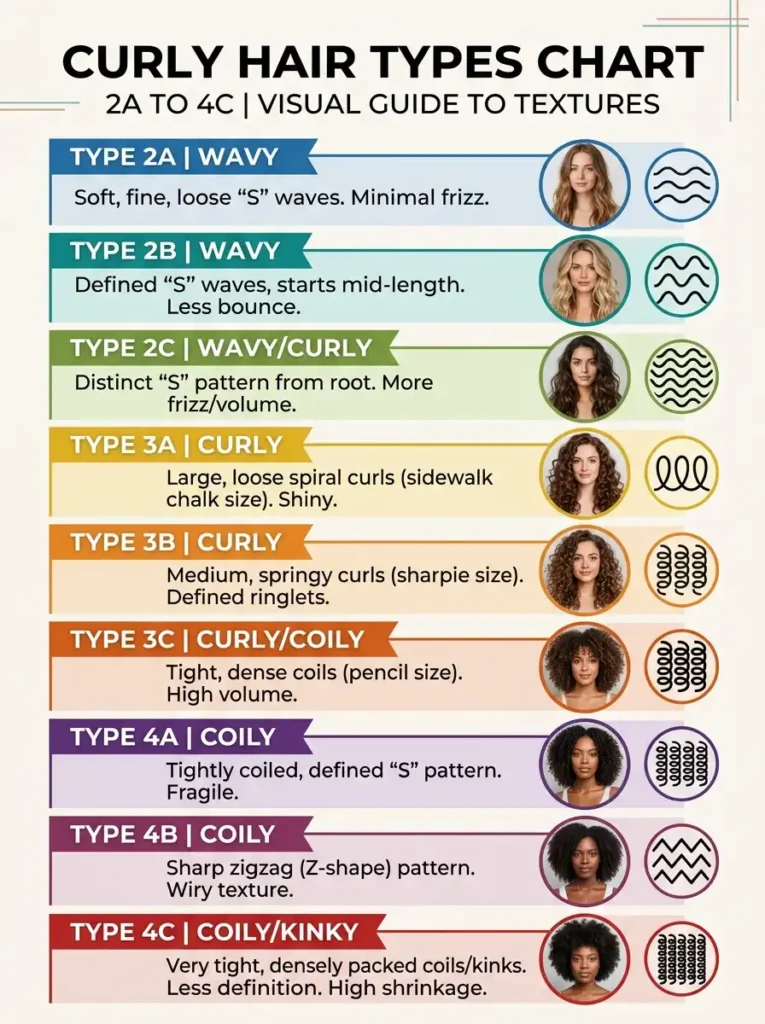
Understanding your hair type is essential when your hair is curly. The Andre Walker Hair Typing System is the most widely used method. It divides hair into types based on the shape and tightness of the curl pattern.
Type 2 – Wavy Hair
Wavy hair is the loosest form of curly hair. It has an S-shaped wave pattern and sits between straight and curly. When hair is curly at this level, it tends to be easier to manage but can still experience frizz and dryness.
- 2A: Fine, loose waves that lie close to the head. Very easy to style and straighten.
- 2B: More defined S-waves with some frizz, especially around the crown area.
- 2C: Thick, coarse waves that begin to look like curls. More prone to frizz and harder to straighten.
Type 3 – Curly Hair
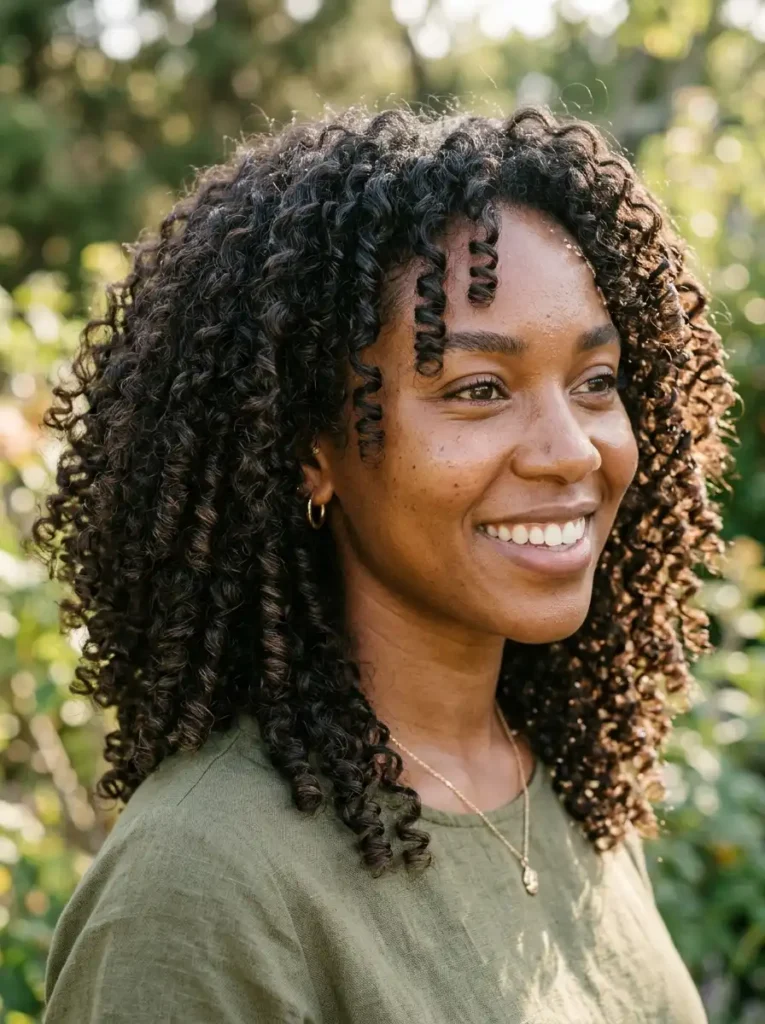
This is what most people picture when they think of curly hair. Type 3 hair is curly with defined spiral patterns and has significant volume and bounce.
- 3A: Large, loose spiral curls roughly the width of a piece of sidewalk chalk. Shiny with a strong pattern.
- 3B: Medium-sized springy curls that hold their shape well. More prone to frizz than 3A.
- 3C: Tight, dense corkscrew curls packed closely together. Very voluminous and can be prone to shrinkage and dryness.
Type 4 – Coily and Kinky Hair
Type 4 hair is curly in its tightest form. The pattern is often described as a zigzag rather than a spiral. This hair type has the most shrinkage and requires the most moisture.
- 4A: Tight coils with a visible S-pattern when stretched. Retains some moisture better than 4B and 4C.
- 4B: Sharp angular bends with a less defined curl pattern. Very fragile and needs gentle handling.
- 4C: Very tight coils with almost no visible pattern when dry. Experiences the most shrinkage, sometimes up to 75 percent of its actual length, and needs the most intensive moisture routine.
Hair Porosity: The Most Important Concept Nobody Talks About Enough
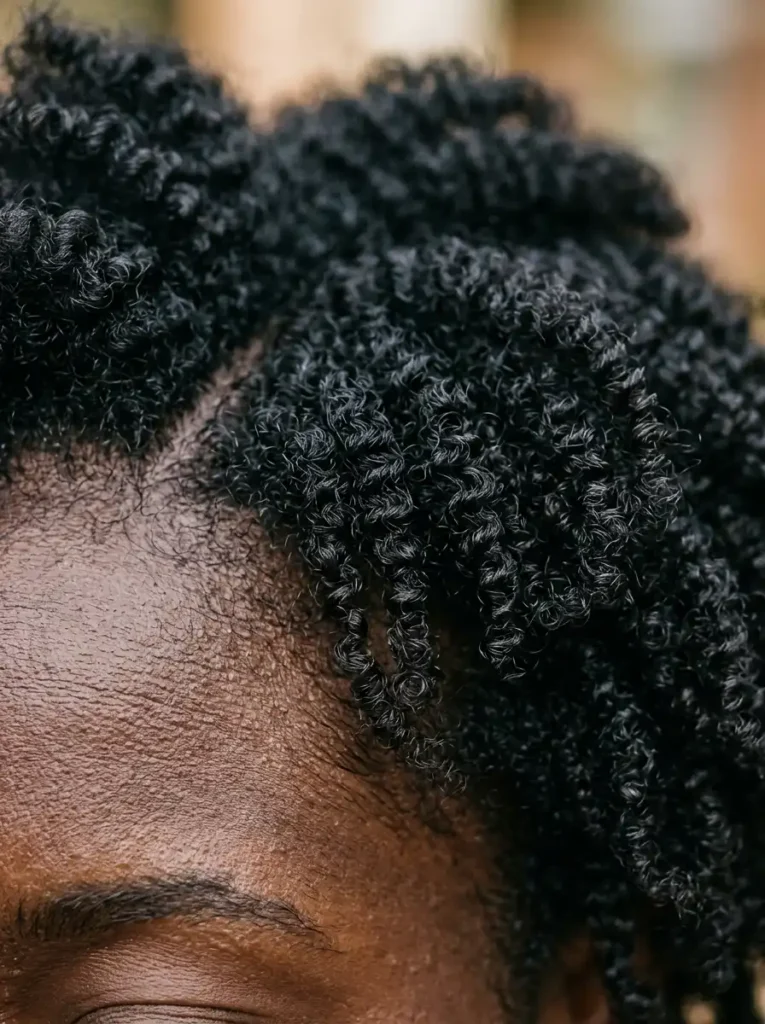
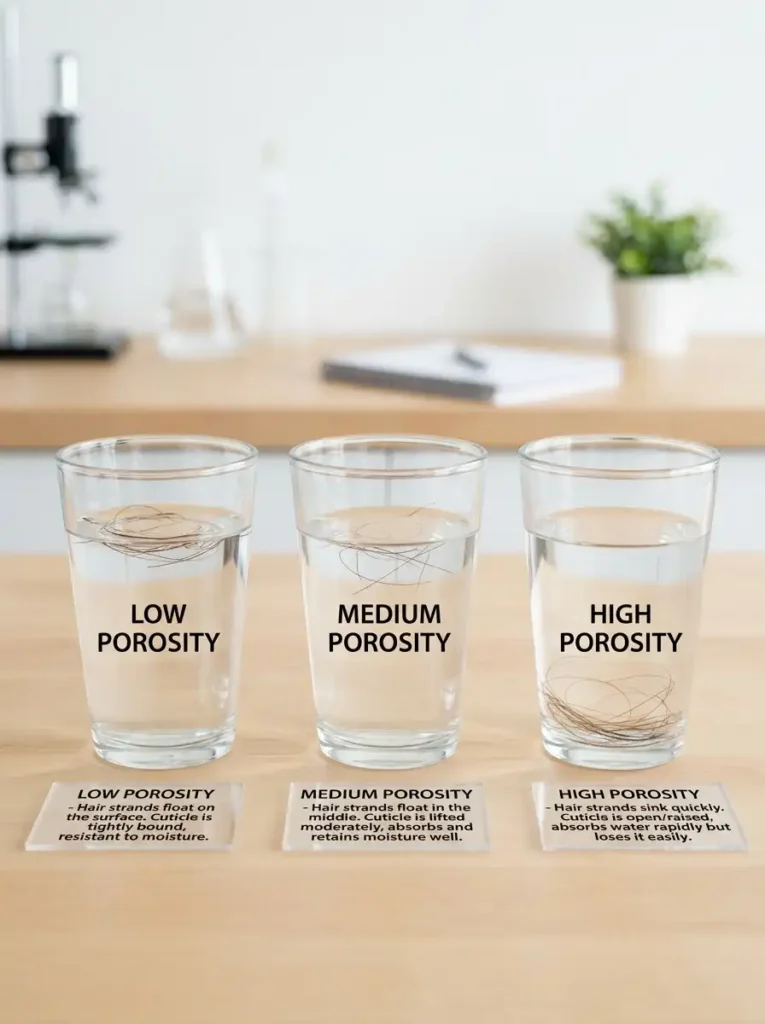
If your hair is curly, understanding porosity can completely change how you care for it. Porosity refers to how well your hair is able to absorb and hold moisture.
Low Porosity
The cuticles are very tightly closed. Products sit on top of the hair instead of being absorbed. Hair takes a long time to get wet and a long time to dry. People with low porosity curly hair should use lighter products and apply them to damp hair with heat to help open the cuticle.
Medium Porosity
The cuticles are slightly open. Hair absorbs and holds moisture well. This is the ideal porosity for curly hair. Medium porosity hair needs regular maintenance to stay balanced.
High Porosity
The cuticles are very open, often because of heat damage, chemical processing, or genetics. Hair absorbs moisture quickly but loses it just as fast. If your hair is curly and high porosity, you need heavier products, oils, and butters to seal moisture in. Protein treatments also help strengthen the hair structure.
How to Test Your Porosity
Take a clean strand of hair and drop it into a glass of water. If it floats, you have low porosity. If it sinks slowly, you have medium porosity. If it sinks immediately, you have high porosity.
The Complete Curly Hair Care Routine for 2026
Now that you understand why your hair is curly and what your specific hair needs, here is a complete routine that covers every step.
Step 1: Clarify Regularly
Before anything else, your scalp and strands need to be clean. Product buildup is a major problem for curly hair. Use a sulfate-free clarifying shampoo once or twice a month to remove buildup while keeping natural oils intact. Avoid clarifying too often as it will strip moisture.
Step 2: Co-Wash Between Wash Days
Co-washing means washing your hair with conditioner instead of shampoo. This keeps your curls moisturized between your regular wash days. When hair is curly, co-washing one to two times per week is often better than using shampoo every time.
Step 3: Deep Condition Weekly
Deep conditioning is non-negotiable for curly hair. Apply a rich deep conditioner once a week and leave it on for at least 20 to 30 minutes with a plastic cap. The heat from your scalp will help the product penetrate the strand. This step restores moisture and improves elasticity significantly.
Step 4: Apply Leave-In Conditioner
After washing, apply a leave-in conditioner to soaking wet hair. Do not rinse it out. This creates a moisture base before you add any styling products. Distribute it evenly using the praying hands method, which means pressing the product into your hair between your palms rather than scrunching it in.
Step 5: Style Using the LOC or LCO Method
The LOC method stands for Liquid, Oil, Cream. The LCO method stands for Liquid, Cream, Oil. Both methods are designed to seal moisture into curly hair in layers.
- LOC: Apply water or leave-in first, then a lightweight oil, then a curl cream.
- LCO: Apply water or leave-in first, then a curl cream, then seal with oil.
People with high porosity hair is curly tend to do better with LOC. People with low porosity hair tend to prefer LCO.
Step 6: Diffuse or Air Dry
Avoid rubbing your hair with a cotton towel. Instead, use a microfiber towel or a cotton T-shirt to scrunch out excess water gently. Let your hair air dry completely or use a diffuser attachment on your blow dryer at the lowest heat and speed setting. Never touch your hair while it is drying as this breaks the curl cast and creates frizz.
Step 7: Refresh on Non-Wash Days
You do not need to rewash your hair is curly every day. On non-wash days, mix water and a small amount of leave-in conditioner in a spray bottle. Lightly mist your hair and scrunch gently to reactivate your curls. You can also add a small amount of gel to reshape any curls that have flattened.
How to Reduce Frizz When Hair Is Curly
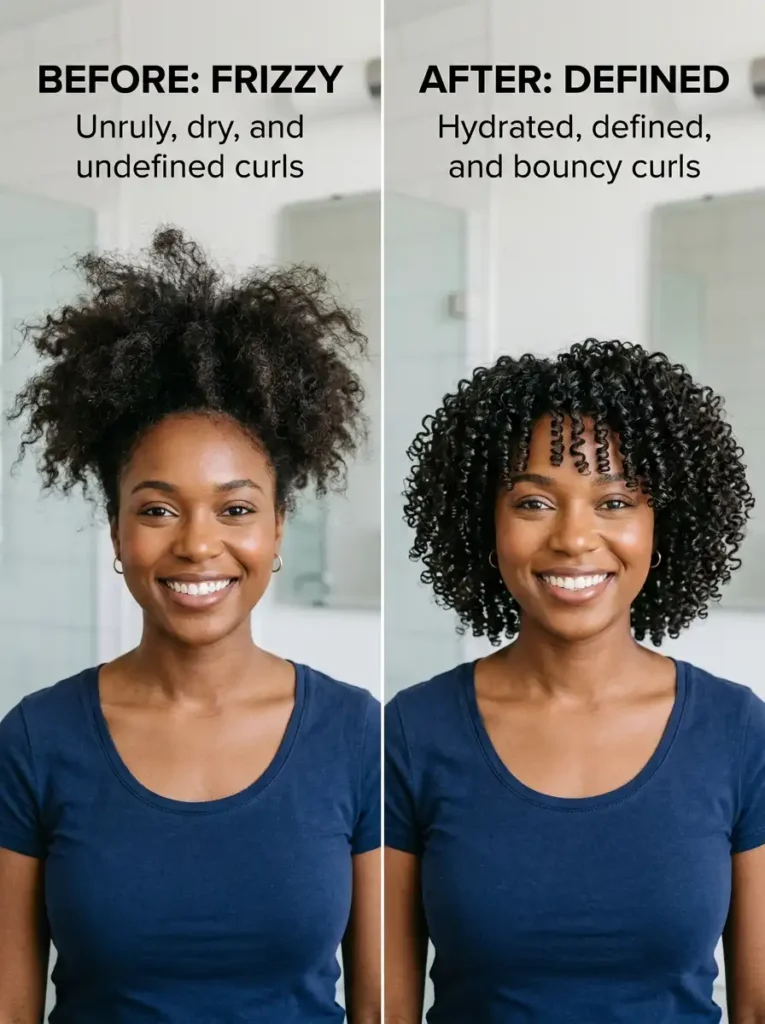
Frizz is the number one complaint among people whose hair is curly. Frizz happens when the hair cuticle is raised and absorbs moisture from the air unevenly. Here is how to fight it effectively.
- Always apply products to soaking wet hair, not damp or dry
- Use a microfiber towel and never a cotton towel
- Sleep on a satin or silk pillowcase or use a satin bonnet or scarf
- Apply a small amount of oil or serum after styling to seal the cuticle
- Do not touch your curls while they are drying
- Keep your hair moisturized at all times because dry hair frizzes much more easily
Common Mistakes That Damage Curly Hair
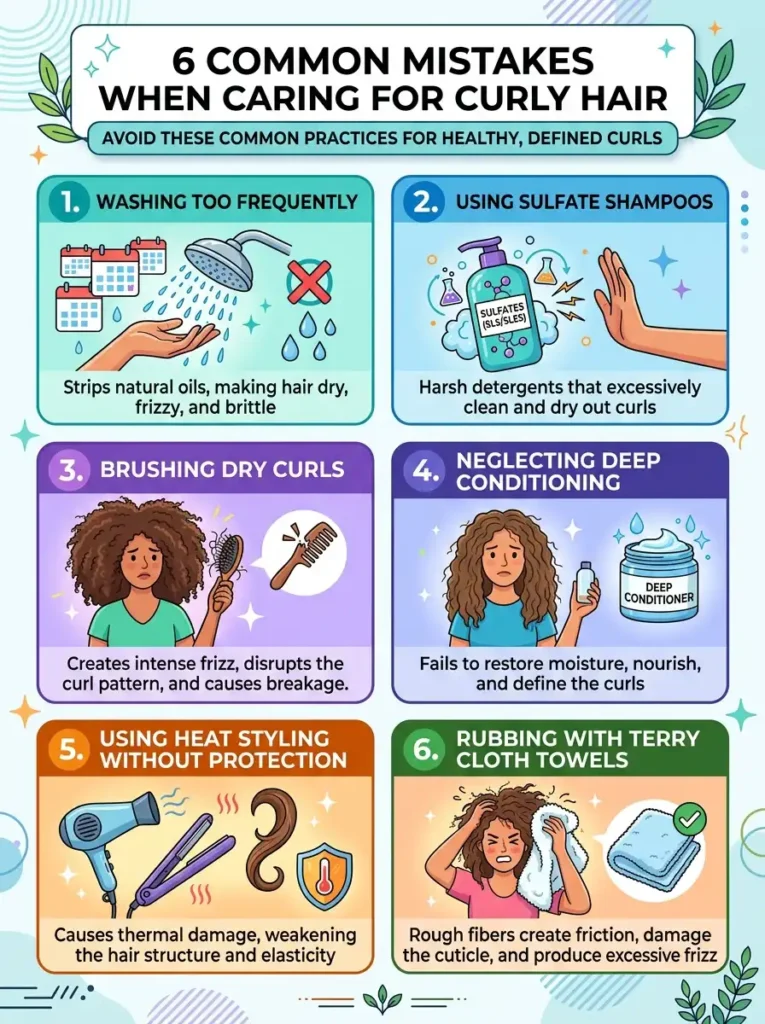
Even with the best intentions, many people make mistakes that damage their curls. Here are the most important ones to avoid when your hair is curly.
Washing too often: Daily washing strips your hair of its natural oils. Stick to one or two times per week.
Using sulfates: Sulfates are harsh detergents that dry out curly hair aggressively. Always check your shampoo label and avoid sodium lauryl sulfate and sodium laureth sulfate.
Brushing dry hair: This breaks the curl pattern and causes massive frizz. Only detangle with a wide-tooth comb or your fingers when hair is wet and has conditioner in it.
Skipping deep conditioning: This is the most important treatment for curly hair. Never skip it.
Overusing heat: Frequent heat styling breaks down disulfide bonds and permanently loosens your curl pattern over time.
Using products with heavy silicones: Silicones coat the hair strand and block moisture from entering. If you do use them, you must clarify regularly to remove the buildup.
Best Ingredients to Look for When Hair Is Curly
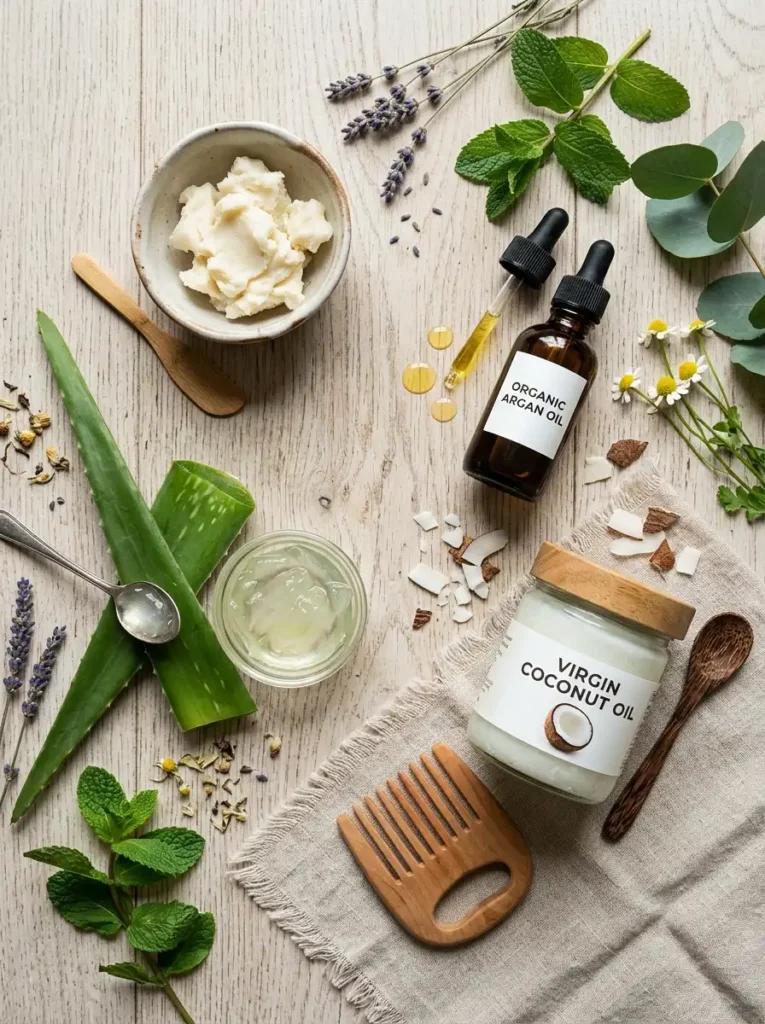
When shopping for products, look for these ingredients that work well for curly hair:
- Shea butter for deep moisture and sealing
- Glycerin for humectant moisture attraction
- Aloe vera for hydration and frizz control
- Castor oil for scalp health and sealing
- Argan oil for shine and softness
- Hydrolyzed keratin for protein and strength
- Coconut oil for deep penetration and moisture
Frequently Asked Questions About Curly Hair
Why is my hair curly only in some parts?
This is very common. Different areas of your scalp have follicles with slightly different shapes, which creates mixed texture patterns across your head.
Can I make my curly hair less frizzy permanently?
You cannot change your hair structure permanently without chemical treatments, but a consistent moisture routine will dramatically reduce frizz over time.
Is it okay to brush curly hair?
Only when it is wet and has conditioner in it. Never brush dry curly hair.
How long does it take to see results from a new curly hair routine?
Most people see noticeable improvement within four to six weeks of following a consistent routine.
Does cutting curly hair make it curlier?
Yes. Removing weight from the ends allows the curl to spring up more freely. Regular trims also remove split ends that cause frizz.
Final Thoughts
Understanding why your hair is curly and what it actually needs is the foundation of every great curl care routine. Curly hair is not difficult to manage. It just requires the right knowledge, the right products, and consistency.
Start by identifying your curl type and porosity. Build a routine around moisture, gentle handling, and protective styling. Avoid the common mistakes that damage curls and be patient with the process. When you give your curly hair what it truly needs, the results are always worth it.