
The Ultimate Sunscreen Guide: Avoid These Costly Mistakes
What It Is and Why Your Skin Needs It Sunscreen is a topical product that protects your skin from the sun’s ultraviolet (UV) radiation — the invisible rays responsible for sunburn, premature aging, and skin cancer. Think of it as a daily shield: whether you’re driving to work, walking your dog, or spending a full…
What It Is and Why Your Skin Needs It
Sunscreen is a topical product that protects your skin from the sun’s ultraviolet (UV) radiation — the invisible rays responsible for sunburn, premature aging, and skin cancer. Think of it as a daily shield: whether you’re driving to work, walking your dog, or spending a full day at the beach, UV rays reach your skin every time you step outside.
The numbers speak for themselves. Regular daily use of SPF 15 sunscreen can reduce your risk of squamous cell carcinoma by about 40%, and lower your melanoma risk by 50%. That makes it one of the most powerful — and affordable — tools in skin cancer prevention.
It works best as part of a complete sun-safe strategy: shade, protective clothing, a wide-brimmed hat, and UV-blocking sunglasses all play a role. Your daily SPF fills in the gaps.
Table of Contents
Who Needs Daily Sun Protection?
Everyone. No exceptions.
Men, women, children over 6 months old, people with dark skin, people who “never burn” — all benefit from daily sunscreen use. Even if you don’t feel the burn, UV radiation silently damages your skin cells every day. That damage accumulates over a lifetime.
Special cases to know:
- Babies under 6 months: Skin too sensitive — keep them in shade and use protective clothing instead.
- Darker skin tones: Melanin offers some natural protection but doesn’t eliminate UV damage or skin cancer risk. Daily SPF is still essential.
- People on medication: Antibiotics, retinoids, and some blood pressure drugs cause photosensitivity. Check with your doctor.
- Skin conditions: Acne, rosacea, or eczema? There’s a sunscreen formula suited for your skin type.
Mineral vs. Chemical: Which Formula Is Right for You?
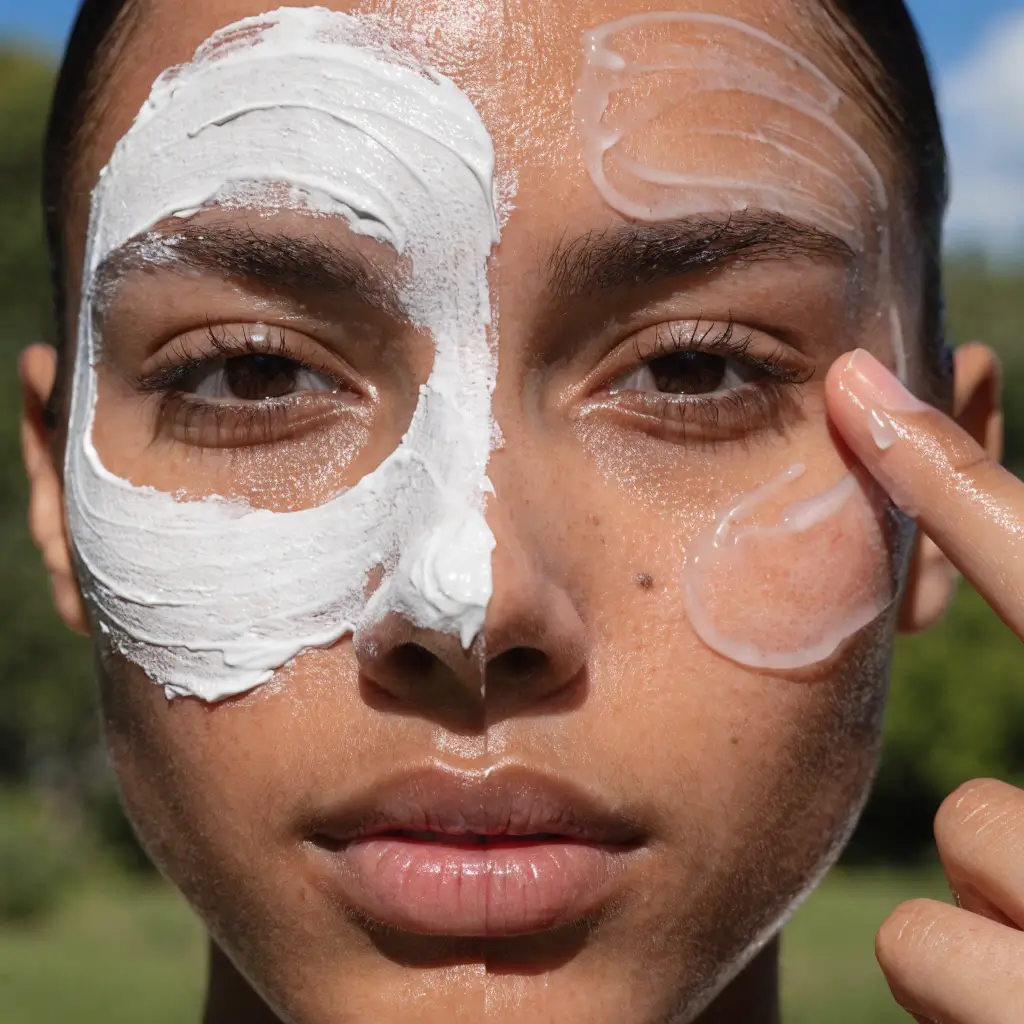
There are two main categories of sunscreen, and they work differently:
Mineral (physical) formulas use titanium dioxide and zinc oxide to physically reflect UV rays before they penetrate your skin — like a mirror.
- ✅ Ideal for sensitive skin and babies (6+ months)
- ✅ Works immediately upon application
- ✅ Lower risk of irritation or allergic reactions
- ⚠️ May leave a white cast on darker skin tones
Chemical formulas use compounds like avobenzone and octisalate to absorb UV rays and convert them into heat released from the skin.
- ✅ Lightweight, invisible finish for daily wear
- ✅ Better for high-SPF, water-resistant options
- ⚠️ Needs 15–20 minutes to activate
- ⚠️ May irritate very sensitive skin
Many modern sunscreens combine both for broad-spectrum protection with a wearable finish.
Choosing by Skin Type
| Skin Type | Recommended Formula |
|---|---|
| Oily / acne-prone | Oil-free, non-comedogenic gel |
| Dry skin | Cream-based with moisturizers |
| Sensitive skin | Mineral-only, fragrance-free |
| Dark skin tones | Tinted mineral or lightweight chemical |
| Active / outdoor | Water-resistant SPF 50+ |
Understanding SPF Numbers
SPF (Sun Protection Factor) measures how well sunscreen protects against UVB rays — the rays that cause sunburn and contribute directly to skin cancer.
Simple math: if your skin reddens after 10 minutes unprotected, SPF 30 gives you 300 minutes of coverage — when applied correctly and not washed off.
SPF Levels Compared
| SPF | UVB Rays Blocked |
|---|---|
| 15 | ~93% |
| 30 | ~97% |
| 50 | ~98% |
| 100 | ~99% |
The gap between SPF 50 and SPF 100 is just 1%. No formula blocks 100% of UV rays — reapplication always matters more than chasing a higher number.
Which Level Do You Need?
- SPF 30 → everyday use: commuting, errands, office near windows
- SPF 50+ → extended outdoors: hiking, sports, beach days
- SPF 50+ water-resistant → swimming or heavy sweating
Broad-Spectrum: Why It Matters
SPF only measures UVB protection. Your skin faces two types of UV radiation:
- UVB rays → sunburn, direct DNA damage, primary driver of skin cancer
- UVA rays → deep skin penetration, photoaging (wrinkles, age spots), skin cancer contribution
Always choose a sunscreen labeled “broad spectrum” — it’s the only way to defend against both UVA and UVB simultaneously.
When to Apply
Every single day — not just beach days or summer.
Up to 80% of UV radiation reaches your skin through clouds. UVA rays pass through car windows, reflect off snow and water, and accumulate during short exposures that add up over years.
Timing that works:
- Apply sunscreen 30 minutes before going outside
- Reapply every 2 hours outdoors regardless of SPF level
- Reapply immediately after swimming or heavy sweating
Pro tip: Make it the last step of your morning routine — after moisturizer, before makeup.
Where to Apply
If it’s exposed to the sun, it needs protection. Easy-to-miss spots:
- Tops and backs of ears
- Back of the neck
- Scalp along the part line (use spray or powder)
- Lips — SPF 30+ lip balm
- Tops of feet
- Back of hands
- Behind the knees
- Eyelids — mineral formula only near eyes
Best practice: Apply sunscreen to your full body before getting dressed so no area gets missed when clothing shifts.
How Much to Use
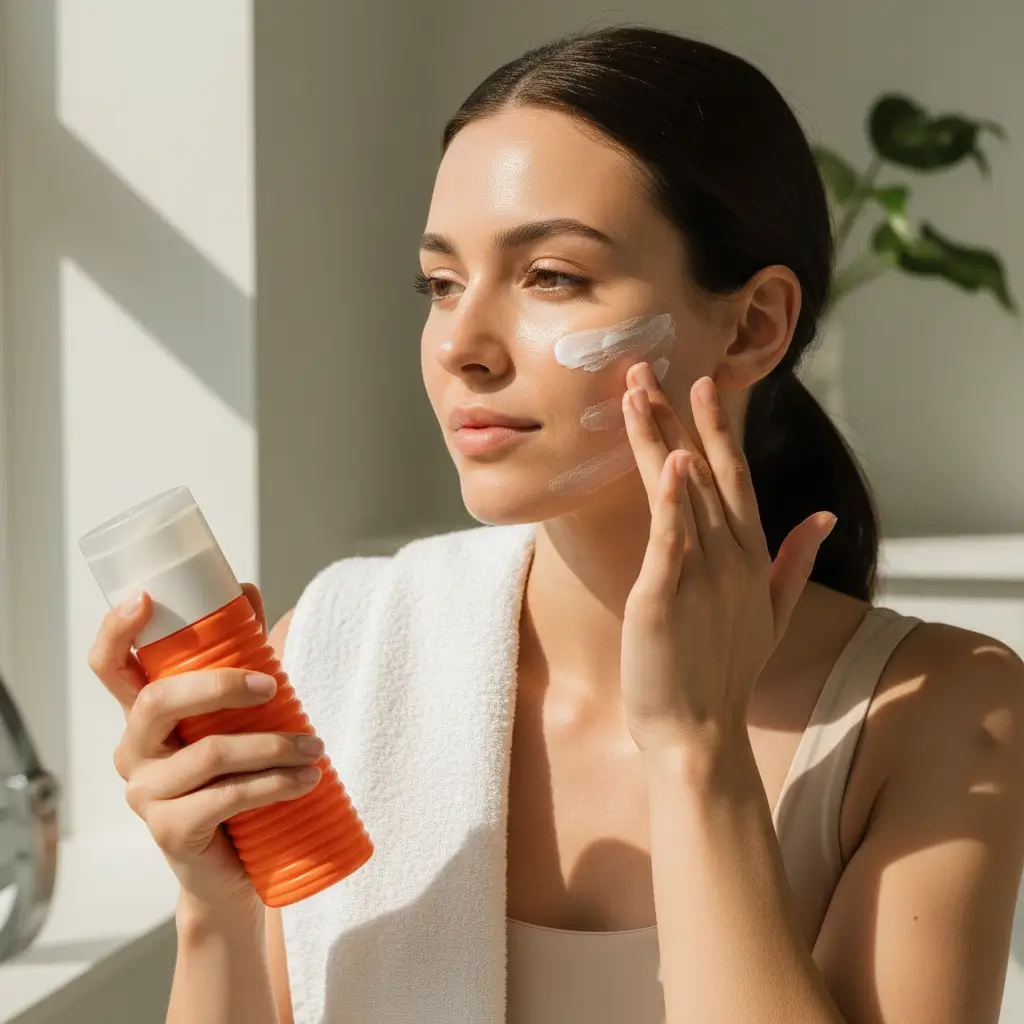
Most people apply only 25–50% of the recommended amount — dramatically reducing protection.
Correct amounts:
- Full body: 1 ounce (a shot glass) per application
- Face + neck: ½ teaspoon per application
- Reapplication: Same amounts every 2 hours
A family of four outdoors all day should go through roughly one 4-ounce bottle of sunscreen per person. Finishing it slowly usually means under-applying.
The Science: Why It’s Preventive Medicine
Skin cancer: UV radiation causes direct DNA damage that accumulates over time, triggering mutations that lead to melanoma and other cancers. Daily sunscreen use interrupts that cycle.
Photoaging: Up to 90% of visible aging — wrinkles, loss of elasticity, uneven tone — comes from UV exposure, not time. Sunscreen is the most evidence-backed anti-aging product available.
Precancerous lesions: Regular use prevents actinic keratoses from developing and can improve existing ones.
5 Myths Debunked
“Dark skin doesn’t need it” — Melanin gives roughly SPF 13 of natural protection. That’s not enough. Skin cancer in darker skin tones is often caught at a later, more dangerous stage.
“It causes vitamin D deficiency” — Research consistently shows that normal daily use doesn’t affect vitamin D levels meaningfully.
“Clouds mean I’m safe” — 80% of UV rays penetrate overcast skies. Cloudy days cause some of the worst unplanned sunburns.
“A tan means I’m protected” — A tan signals skin damage. It offers roughly SPF 4 — far below what sunscreen provides.
“It’s toxic” — Every major dermatology and oncology organization worldwide confirms approved SPF ingredients are safe. The danger of unprotected skin is far greater.
What to Look For on the Label
✅ Broad spectrum coverage ✅ SPF 30+ for daily use / SPF 50+ for outdoors ✅ Water resistant (40 min) or very water resistant (80 min) for active use ✅ Non-comedogenic for acne-prone skin ✅ Fragrance-free for sensitive skin ✅ Zinc oxide or titanium dioxide for mineral protection
Beyond SPF: A Complete Strategy
Sunscreen is your foundation — build on it:
- Shade between 10 AM – 4 PM (peak UV hours)
- UPF-rated clothing for reliable fabric protection
- Wide-brimmed hat — minimum 3-inch brim
- UV-blocking sunglasses — protects eyes and surrounding skin
- Daily UV Index check — protection needed at level 3 and above
FAQ
Can I use an expired product? Most sunscreens stay stable for 2–3 years. Discolored or separated formula? Replace it.
Does SPF in makeup count? No — it’s never applied thickly enough to reach the labeled SPF. Always layer a dedicated product underneath.
Do I need it in winter? Yes. UVA levels stay consistent year-round. Snow and altitude amplify UVB significantly.
Face vs. body formula — same thing? You can, but facial sunscreens are formulated lighter. Oily or acne-prone skin benefits from a dedicated face product.
Sunscreen vs. sunblock — what’s the difference? The FDA now uses “sunscreen” for both mineral and chemical types. “Sunblock” is an outdated marketing term.
Reviewed by a board-certified dermatologist. Last updated: 2026.
Discover more trends:
Follow us on: Pinterest | Facebook