
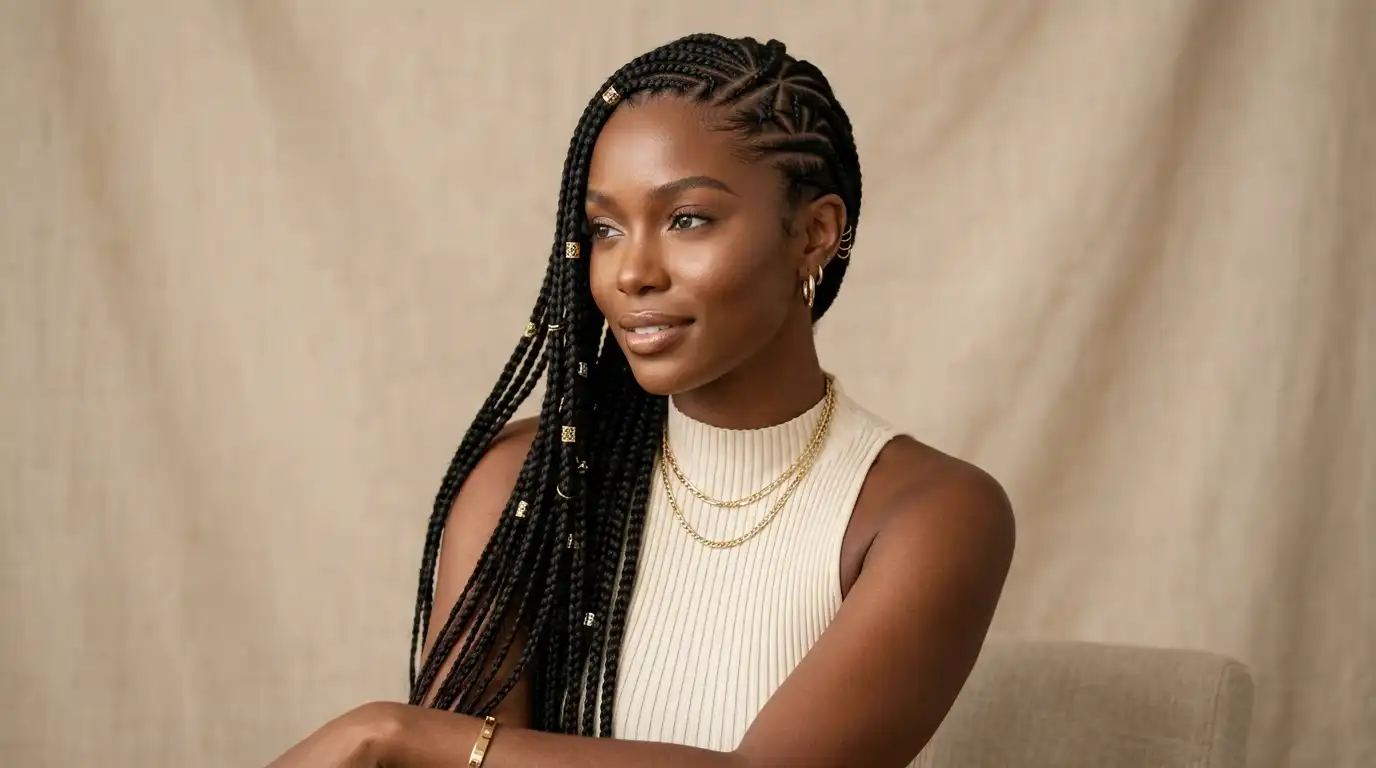
The Ultimate Guide to Tribal Braids: 15 Stunning Styles & Maintenance Tips
If you are searching for a protective hairstyle that seamlessly blends cultural heritage, jaw-dropping aesthetics, and top-tier versatility, look no further than tribal braids. From dramatic side sweeps to intricate geometric cornrows adorned with cowrie shells and beads, this iconic hairstyle has completely dominated runways, red carpets, and everyday street style. But what exactly sets tribal…
If you are searching for a protective hairstyle that seamlessly blends cultural heritage, jaw-dropping aesthetics, and top-tier versatility, look no further than tribal braids. From dramatic side sweeps to intricate geometric cornrows adorned with cowrie shells and beads, this iconic hairstyle has completely dominated runways, red carpets, and everyday street style.
But what exactly sets tribal braids apart from standard box braids or basic cornrows? How do you choose the right style for your face shape, and most importantly, how do you keep your scalp healthy while wearing them?
In this comprehensive guide, we are breaking down everything you need to know. We will explore the rich cultural roots behind these looks, highlight the trendiest tribal braids hairstyles to show your stylist this year, and share professional maintenance secrets to keep your hair pristine for weeks.
What Are Tribal Braids? Exploring the Cultural Roots
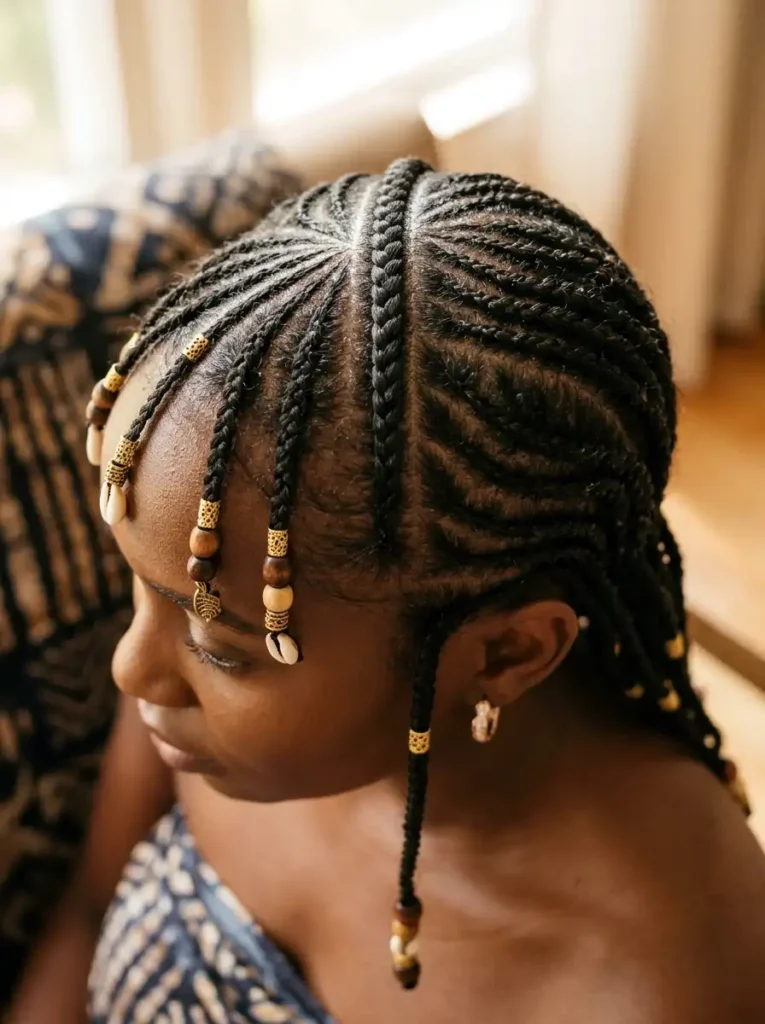
Tribal braids are not just a passing beauty trend; they are a profound celebration of ancestral artistry. The term serves as an umbrella for various traditional West African braiding techniques. Originally, these intricate braiding styles communicated essential social messages within African communities—signifying a person’s age, tribal affiliation, marital status, wealth, and social rank.
Today, wearing these styles is an empowering form of self-expression. They combine the sleek structure of flat cornrows with the free-flowing movement of individual box plaits. For a deeper dive into how traditional braiding techniques evolved across different eras and continents, check out our complete breakdown on the History of Braids: The Fascinating Untold Story.
Tribal Braids vs. Box Braids vs. Cornrows: What’s the Difference?
To help you decide which protective style suits your lifestyle and tension tolerance, here is a quick comparison table:
| Hairstyle | Technique & Structure | Install Time | Best For |
|---|---|---|---|
| Tribal Braids | A hybrid mix of cornrows in the front and individual plaits in the back, often accessorized. | 4 – 7 Hours | Maximum styling versatility and cultural flair. |
| Box Braids | Individual plaits divided by square, triangle, or diamond-shaped parts across the entire head. | 5 – 8 Hours | Low-tension movement and heavy styling flexibility. |
| Cornrows | Braids laid completely flat and tightly against the scalp in straight lines or geometric designs. | 2 – 4 Hours | Active lifestyles, athletes, or wearing under wigs. |
(If you lead a highly active lifestyle or play sports, you might also love our guide on the 15 Best Softball Hairstyles: The Ultimate Guide for Every Player).
15 Trending Tribal Braids Styles to Try This Season
Whether you prefer clean, elegant minimalism or bold, bohemian glamour, there is a tribal pattern designed specifically for your aesthetic. Here are the most breathtaking tribal braids styles to inspire your next salon visit.
1. The Classic Fulani Braid Look
The classic fulani braid is the crown jewel of tribal hairstyles. Inspired by the Fulani people of West Africa, this iconic look features a distinct central cornrow straight down the middle parting, accompanied by side-swept cornrows and hanging plaits on the sides. It is traditionally adorned with wooden beads or golden cuffs. For an extensive history on this specific pattern, explore our dedicated feature on Fulani Braids: History, Styles, and Maintenance Tips.
2. Fulani Braids with Knotless Back
If you struggle with a sensitive scalp but still want the architectural beauty of a tribal pattern, fulani braids with knotless individual plaits in the back are your ultimate match. Because the back sections are installed using the feed-in knotless method (without the traditional painful knot at the root), this style offers immediate flexibility, zero scalp tension, and effortless styling into buns or ponytails on day one.
3. Cornrows in Front Individuals in Back

Known colloquially as the “half-and-half” masterpiece, the cornrows in front individuals in back design is highly practical. The front cornrows give you a sleek, face-framing structure that stays flawlessly neat, while the individual plaits in the back provide the volume, length, and free-flowing movement of standard box braids. It is the absolute best of both worlds.
4. Fulani Tribal Braids with Curls (Bohemian Style)
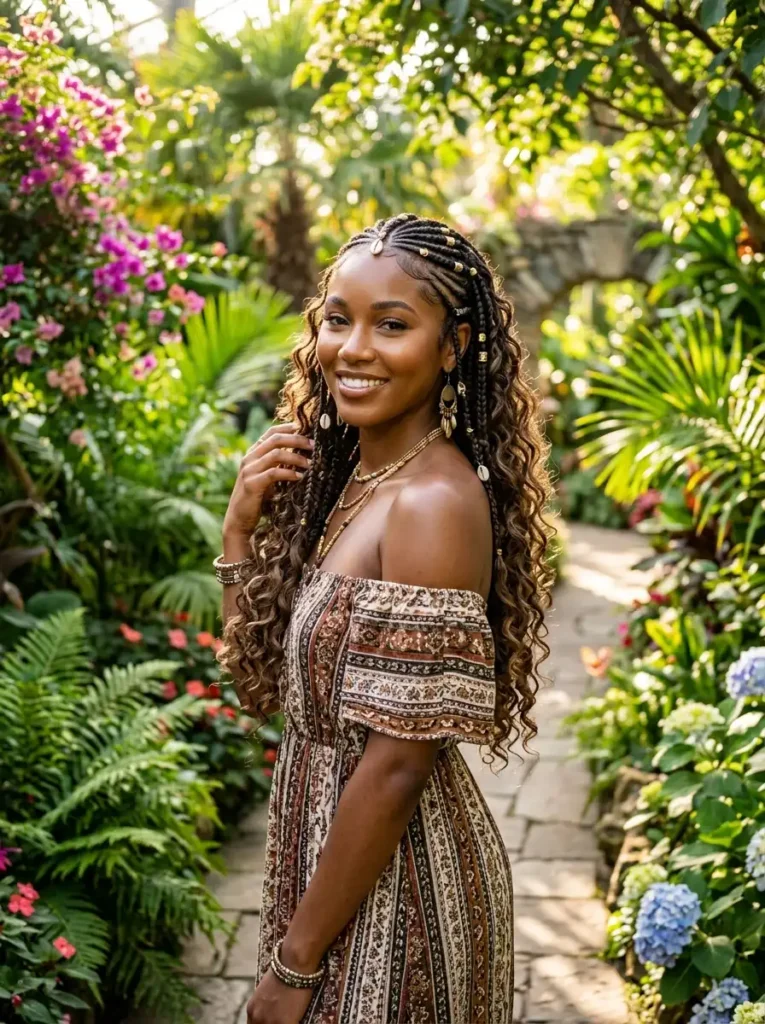
Take your protective style to a goddess-tier aesthetic by combining structured cornrows with cascading, loose curly extensions. Adding deep wave or water wave human hair pieces along the length of the braids softens the overall look, creating a romantic, textured vibe that is perfect for summer vacations and weddings.
5. Side-Swoop Lemonade Tribal Braids
Popularized by Beyoncé, this side-parted variation sweeps all the cornrows gracefully to one side of the head. It accentuates the jawline and cheekbones, offering a deeply sophisticated, modern twist on traditional flat patterns.
6. Intricate Heart-Patterned Tribal Braids
Looking to make a bold, romantic statement? Request a detailed braided heart design right above your ear or at the temple. This trendy, eye-catching addition turns a standard protective style into a custom work of art.
7. Middle Part Tribal Braids with Cowrie Shells
Incorporating natural cowrie shells at the base of your central parting or at the tips of your braids anchors your hairstyle in authentic West African heritage. Shells bring an earthy, regal energy to your aesthetic.
8. Jumbo Tribal Feed-In Braids
Don’t have six hours to sit in a braider’s chair? Opt for jumbo feed-in braids. By creating larger, thicker cornrows, your stylist can complete this striking, high-impact look in half the time.
9. Geometric Triangle Parting Tribal Braids
Swap out traditional straight vertical parting for sharp, clean triangular sections in the front. The geometric lines create a captivating visual grid on the scalp that looks ultra-modern.
10. Multi-Directional Stitch Braids
Stitch braiding involves using the pinky fingernail or a rat-tail comb to create sharp, razor-clean horizontal lines along the base of each cornrow. When styled into multi-directional curves, stitch braids look incredibly sharp and polished.
11. Tribal Braids into a Sleek High Ponytail
For an instant face-lift effect, have your stylist braid all the front and back cornrows upwards toward the crown of your head, gathering them into a swishy, cascading ponytail.
12. Short Bob Tribal Braids
If you dislike the heavy weight of waist-length extensions, a chin-length braided bob is exceptionally chic, lightweight, and low-maintenance. (Loving shorter lengths right now? Discover our latest roundup of Hair Trends Bob 2026: 15 Trendy Styles Women Love).
13. Layered Tribal Braids
By installing braids at varying lengths (some stopping at the collarbone, others reaching the waist), you achieve beautiful natural framing and incredible, dynamic volume.
14. Two-Layer Butterfly Tribal Braids
This advanced technique uses two distinct layers of cornrows to create double the density. It is ideal for women with fine or thinning natural hair who want to achieve a full, voluminous look.
15. Colorful Ombré Tribal Braids
Why stick to natural shades? Weave in honey blonde, rustic copper, or deep burgundy extensions to create a stunning ombré transition that makes your braid patterns truly pop. If you love experimenting with unique textures and weaves, check out our seasonal guide on Stunning Braided Hairstyles: Elevate Your Look This Season.
Professional Maintenance: How to Care for Your Tribal Braids

Getting the braids installed is only the first step; maintaining your natural hair underneath is what guarantees real length retention. Here is your essential step-by-step care routine:
1. Pre-Installation Prep is Non-Negotiable
Before booking your braider, you must clarify your scalp and infuse your strands with moisture. Wash your hair with a clarifying shampoo, follow up with an intensive deep conditioning masque, and trim your split ends. Braid extensions grip better and cause less breakage on healthy, well-moisturized hair.
2. Keep Your Scalp Hydrated & Soothed
Tension flakes and dry scalp are the top enemies of protective styles. Use a narrow nozzle applicator bottle to apply a lightweight soothing oil—such as jojoba, peppermint, or tea tree oil—directly to your exposed scalp parts 2 to 3 times a week. Avoid heavy, thick greases that clog hair follicles.
3. Cleanse Without Causing Frizz
You do not have to skip wash day just because you have braids. To wash your hair without creating massive frizz:
- Mix equal parts clarifying shampoo and warm water in a spray bottle.
- Spray the solution directly onto your scalp parts and gently massage with the pads of your fingertips (never use your fingernails).
- Rinse thoroughly with warm water in the shower.
- Crucial Step: You must sit under a hooded dryer or use a blow dryer on a cool setting until your braids are 100% dry. Leaving thick braids damp can lead to mildew and unpleasant odors.
4. Master the Nighttime Wrap Routine
Never sleep on raw cotton pillowcases with unprotected braids, as cotton creates friction and sucks the moisture right out of your hair. Wrap your braids nightly in a high-quality silk or satin scarf, securing the hanging ends in a large satin bonnet.
Frequently Asked Questions (FAQs)
What are tribal braids?
Tribal braids refer to a collection of traditional West African braiding styles characterized by intricate patterns, geometric partings, and a combination of flat cornrows and hanging individual plaits. They are frequently styled with cultural adornments like beads, rings, and cowrie shells.
How long do tribal braids last?
With proper nighttime protection and regular scalp moisturizing, tribal braids typically last between 4 to 6 weeks. It is not recommended to keep them in past 6 weeks, as new hair growth can begin to lock and tangle around the base of the extensions.
How long does it take to get tribal braids installed?
Depending on the length of the extensions, the size of the parting (jumbo vs. micro), and your stylist’s speed, a full head of tribal braids takes anywhere from 4 to 7 hours.
Are Fulani and tribal braids the same thing?
Not entirely. Fulani braids are a very specific, historic hairstyle originating from the Fulani people of West Africa (distinguished by a central cornrow straight down the middle). Tribal braids is a broader umbrella term that includes Fulani braids, Ghana braids, lemonade braids, and various other ancestral cornrow patterns.
Can tribal braids damage my natural hair?
When installed correctly by a professional who avoids excessive tension on your delicate hairline, tribal braids are an excellent protective style that promotes hair growth. However, if braided too tightly, they can cause tension alopecia. Always speak up if your braider is pulling too hard!
Conclusion
Tribal braids offer a magnificent blend of powerful cultural storytelling, breathtaking elegance, and everyday practicality. Whether you decide to rock the timeless fulani braid structure, experiment with cornrows in front individuals in back, or go full bohemian with curly extensions, this protective style guarantees you will look polished and beautiful for weeks on end.
Remember to prioritize your scalp care, wrap your hair every single night, and enjoy the incredible freedom that comes with waking up perfectly styled!
Which tribal braid style are you trying first this season? Let us know in the comments below, and don’t forget to bookmark this page to show your braider at your next appointment!